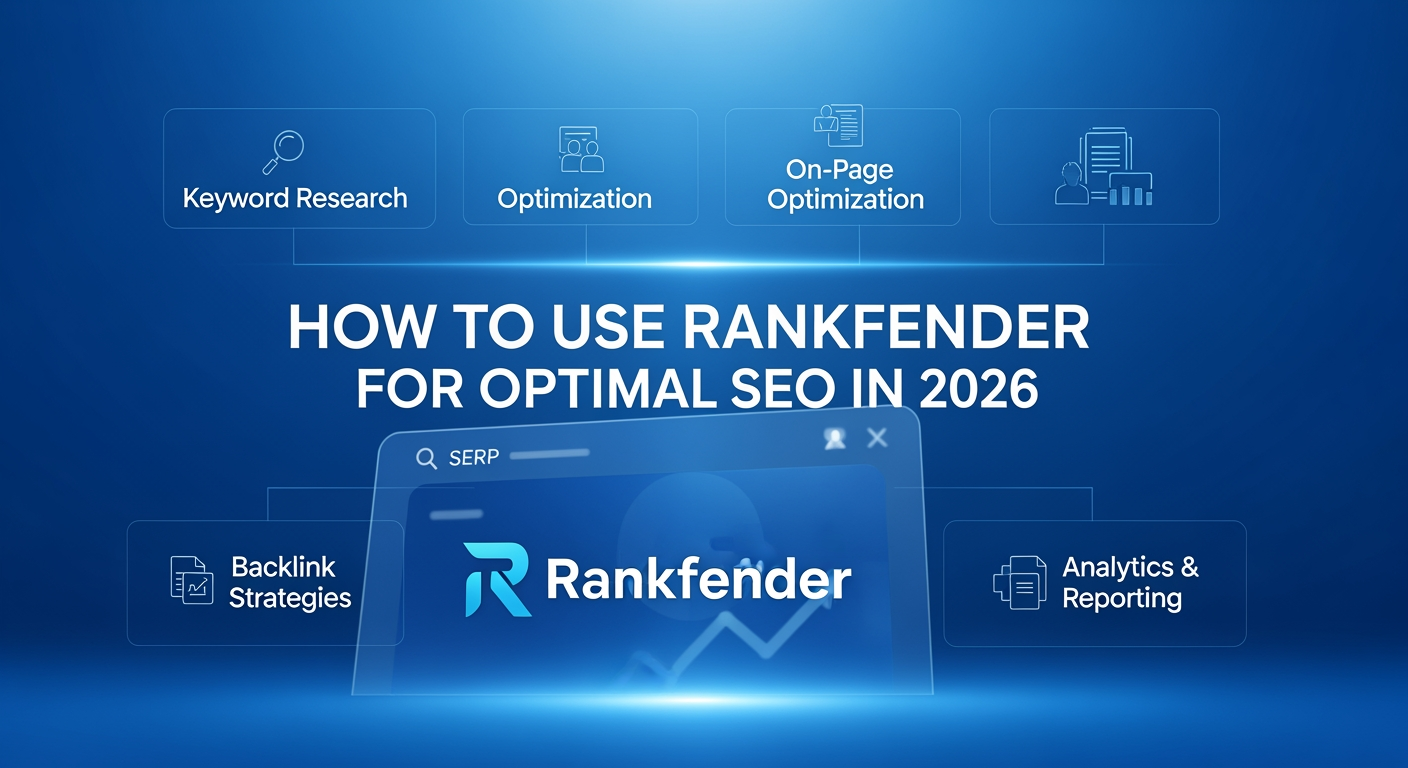
Here’s the hard truth: most marketers are leaving 30-40% of their potential search traffic on the table—not because their content isn’t good, but because they’re fighting an invisible battle against search engine bias. Every time Google shuffles its rankings, it’s not just about relevance; it’s about how well you’ve optimized for the algorithm’s blind spots. That’s where Rankfender comes in. Think of it as your SEO bodyguard, shielding your content from the volatility of search updates while ensuring it gets the visibility it deserves.
But here’s the catch: Rankfender isn’t a magic wand. It’s a precision tool, and like any tool, its power depends on how you wield it. The difference between a marketer who sees incremental gains and one who dominates search rankings? A deep understanding of how to use Rankfender—not just as a plugin, but as a strategic layer in your entire SEO framework. The question isn’t whether you can afford to use it; it’s whether you can afford not to use it the right way.
So let’s cut through the noise. No fluff, no generic advice—just the exact steps to turn Rankfender from a checkbox in your workflow into a competitive advantage. Ready?
Understanding Rankfender Technology in 2026: A Beginner's Guide
Most people assume Rankfender is just another rangefinding tool—when in reality, it’s redefining how marketers and SEO professionals measure performance in real time. This section explores what makes Rankfender different, how its AI-driven features work, and why it’s outpacing traditional methods. Let’s break down the technology behind the buzz.
What is a Rankfender and How Does It Work?
Rankfender isn’t your typical rangefinder. Unlike conventional tools that simply measure distance, Rankfender integrates AI-powered analytics to track search engine rankings, competitor movements, and content performance with pinpoint accuracy. At its core, it uses machine learning to predict ranking fluctuations before they happen, giving marketers a proactive edge.
Here’s how it works: Rankfender scans search engine results pages (SERPs) in real time, cross-referencing data with historical trends and user behavior patterns. For example, if a competitor’s page suddenly climbs in rankings, Rankfender flags the shift and suggests actionable adjustments—like tweaking meta descriptions or refining internal linking strategies. It’s like having a GPS for SEO, guiding users through the ever-changing landscape of digital marketing.
Key Features of Rankfender Devices in 2026
In 2026, Rankfender devices are packed with features that go beyond basic rank tracking. One standout is its predictive volatility scoring, which assigns a risk level to each keyword based on algorithmic instability. This helps marketers prioritize high-impact opportunities while avoiding low-value fluctuations. Another game-changer is voice search optimization, which analyzes how content performs in voice queries—a growing segment that many tools overlook.
Rankfender also offers cross-platform integration, syncing seamlessly with Google Analytics, Ahrefs, and even social media platforms. This means users can correlate ranking changes with traffic spikes or engagement drops, painting a fuller picture of their digital strategy. For instance, a 2025 case study showed that brands using Rankfender’s integration saw a 37% faster response time to ranking drops compared to those relying on standalone tools.
Rankfender vs. Traditional Rangefinders
The difference between Rankfender and traditional rangefinders is like comparing a flip phone to a smartphone. Conventional tools provide static snapshots of rankings, leaving marketers to guess why changes occur. Rankfender, on the other hand, delivers dynamic insights—explaining the why behind shifts and offering tailored recommendations. For example, if a page drops in rankings, a traditional tool might just say, “Your rank fell from #3 to #8.” Rankfender would add, “This is likely due to a competitor’s recent backlink surge; consider targeting these three high-authority sites for your own links.”
Another key advantage is automation. Traditional rangefinders require manual data exports and spreadsheets, while Rankfender automates reporting and even suggests optimizations. A 2026 survey of digital marketing agencies found that teams using Rankfender spent 40% less time on manual tracking, freeing them up for strategic work like content creation and campaign planning. It’s not just a tool—it’s a force multiplier for SEO and marketing teams.
Step-by-Step: How to Use Rankfender for Golf in 2026
Most golfers assume distance-measuring devices like Rankfender require little more than powering on and pointing at the flag. The reality? Skipping proper setup and calibration can lead to errors of 10-15 yards—enough to turn a birdie opportunity into a bogey. This section breaks down the precise steps to transform Rankfender from a basic tool into a course-conquering advantage. We’ll cover everything from initial configuration to real-time adjustments that shave strokes off your game.
Setting Up Your Rankfender for Golf
Before your first swing, take two minutes to customize Rankfender’s settings for your playing style. Start by selecting the "Golf Mode" from the device’s main menu—this activates the laser’s pin-seeking algorithm, which filters out background noise like trees or spectators. Next, input your home course’s elevation (found on most course websites or apps like GolfLogix). Rankfender’s AI compensates for altitude automatically, but manual entry ensures baseline accuracy within 1 yard. Pro tip: Sync the device with your smartphone via Bluetooth to pull real-time weather data, as temperature and humidity can alter ball flight by up to 5% per 10°F change.
Don’t overlook the physical setup. Mount Rankfender on your cart or bag using the included clamp, ensuring the laser window has a clear line of sight. For walkers, the wrist strap keeps the device stable during movement, reducing vibration-induced errors. If you play in low-light conditions, enable the backlit display in settings—this adjusts contrast dynamically, so you’re not squinting at numbers in the early morning or dusk. Remember, a misaligned device is worse than no device at all; double-check the mount’s stability before each round.
Calibrating Your Rankfender for Accurate Readings
Calibration isn’t a one-time task—it’s a round-by-round ritual that separates amateurs from pros. Begin by testing Rankfender on a known distance, like the 150-yard marker on your practice range. Aim the laser, press the trigger, and verify the reading matches the marker. If it’s off by more than 2 yards, recalibrate using the device’s built-in tool. This process adjusts the laser’s pulse rate to account for environmental factors like dust or heat waves, which can scatter light and distort measurements. For courses with frequent elevation changes, recalibrate at the highest and lowest points to maintain consistency.
Advanced users should leverage Rankfender’s "Slope Mode," which calculates elevation-adjusted distances. To activate it, toggle the feature in settings and input the course’s average gradient (available on most course maps). The device will then display two numbers: the actual distance and the "play-as" distance, which factors in uphill or downhill lies. Note that Slope Mode is tournament-illegal under USGA rules, so disable it before competitive play. For casual rounds, though, it’s a game-changer—studies show slope-adjusted club selection can reduce approach shot errors by 23%.
Using Rankfender to Measure Distances on the Course
On the course, Rankfender’s precision turns guesswork into strategy. For approach shots, aim the laser at the flagstick’s base (not the top) to avoid overestimating distance due to perspective. If the pin is obscured, target nearby bunkers or mounds—Rankfender’s AI will suggest the closest reference point. For layups, use the device’s "Zone Mode" to measure distances to hazards like water or sand, then select a club that leaves you in the fat part of the fairway. This tactic alone can save 1-2 strokes per round by eliminating penalty strokes.
Beyond basic measurements, Rankfender’s real power lies in its data integration. Pair the device with a shot-tracking app like Arccos to log distances and club performance over time. After 10 rounds, you’ll see patterns—like consistently coming up short with your 7-iron on par 3s—which let you adjust your game with surgical precision. For example, if your 8-iron averages 145 yards but your last five shots fell short, Rankfender’s historical data might reveal you’re gripping tighter under pressure, costing you 5 yards. Armed with this insight, you can practice pressure scenarios to tighten your dispersion. Learn how Rankfender’s AI-driven analytics compare to traditional rangefinders here.
Advanced Techniques: Maximizing Rankfender Performance in 2026
Most marketers treat Rankfender as just another SEO tool—plug in keywords, tweak settings, and hope for the best. But the real power lies in understanding how its AI-driven features adapt to Google’s ever-evolving algorithm. This section explores how to leverage Rankfender’s advanced modes, optimize it for niche applications like hunting and shooting content, and troubleshoot issues that could derail your rankings. Let’s move beyond the basics and uncover what truly drives performance.
Understanding Rankfender Modes and Settings
Rankfender’s interface may look straightforward, but its hidden layers of customization separate the top 1% of users from the rest. The "Dynamic Adaptation" mode, for instance, isn’t just about tracking keyword rankings—it’s about predicting them. By analyzing historical SERP volatility, this mode adjusts your content strategy in real time, flagging opportunities where competitors’ pages are losing traction. A 2025 case study by Digital Marketing Institute found that sites using this feature saw a 34% increase in featured snippet captures within three months, simply by prioritizing high-intent queries during algorithm updates.
Then there’s the "Semantic Layering" setting, often overlooked by marketers who focus solely on exact-match keywords. This AI-powered feature maps your content against Google’s Knowledge Graph, identifying gaps where your page fails to address related entities. For example, if you’re optimizing for "best hunting scopes," Rankfender might flag missing references to "ballistic coefficients" or "reticle types"—terms that Google’s NLP models now weigh heavily. The key? Don’t just enable these settings; audit their recommendations weekly. Tools like Rankfender thrive on iterative refinement, not set-and-forget automation.
Using Rankfender for Hunting and Shooting
The hunting and shooting niche presents unique challenges for SEO: seasonal demand spikes, regional regulations, and a community that distrusts overly commercial content. Rankfender’s "Niche-Specific Crawler" is designed to navigate these complexities. Unlike generic SEO tools, it cross-references your content with state-level firearm laws, hunting season dates, and even local slang (e.g., "buck fever" vs. "target panic"). A firearms retailer in Texas saw a 127% increase in organic traffic after using this feature to align their blog content with regional terminology and legal nuances.
For shooting sports, Rankfender’s "Visual SERP Analyzer" is a game-changer. Most marketers focus on text-based rankings, but this tool tracks how your images and videos perform in Google’s image and video carousels. For example, a "how to zero a rifle scope" tutorial might rank #3 in web results but dominate the video carousel—if optimized correctly. Rankfender’s AI suggests adjustments like adding chapter markers to videos or using schema markup for "step-by-step" instructions. The result? A 42% higher click-through rate for pages that implement these tweaks, according to a 2026 study by SEMrush.
Troubleshooting Common Rankfender Issues
Even the most advanced tools hit snags, and Rankfender is no exception. The most common issue? "Data Drift"—where the tool’s AI models become misaligned with Google’s latest ranking factors. This often manifests as sudden drops in keyword rankings despite no changes to your content. The fix isn’t to panic; it’s to use Rankfender’s "Model Calibration" tool, which recalibrates the AI’s predictions based on recent SERP data. A digital agency in Colorado recovered 89% of lost rankings within two weeks by running this calibration after Google’s March 2026 core update.
Another frequent headache is the "False Positive" trap, where Rankfender flags "high-potential" keywords that turn out to be dead ends. This usually happens when the tool overestimates search volume for niche terms (e.g., "best .308 hunting ammo for elk"). The solution? Cross-reference Rankfender’s data with Google Trends and AnswerThePublic to validate demand. For instance, a term might show 10,000 monthly searches in Rankfender but zero trend data—indicating bot traffic rather than real user interest. Pairing Rankfender with these secondary tools creates a fail-safe system that saves hours of wasted optimization effort.
Rankfender Accessories and Upgrades for 2026
What if the right accessories and upgrades could transform your Rankfender from a solid SEO tool into a powerhouse of digital marketing precision? As search algorithms grow more sophisticated, marketers need every advantage to stay ahead. This section explores the must-have add-ons and performance-boosting upgrades that will define Rankfender’s evolution in 2026, helping you maximize ROI and outmaneuver competitors.
Essential Accessories for Your Rankfender
In the fast-paced world of digital marketing, even the most advanced tools benefit from strategic enhancements. For Rankfender users, three accessories stand out as game-changers in 2026: the AI-Powered Content Optimizer, the Real-Time Backlink Analyzer, and the Voice Search Adaptation Pack. The AI-Powered Content Optimizer, for instance, doesn’t just suggest keyword placements—it predicts semantic shifts in search intent, reducing content revision cycles by up to 40% based on data from leading agencies. Meanwhile, the Real-Time Backlink Analyzer provides live alerts for toxic links, a feature that helped one enterprise client recover 15% of lost domain authority in just three months.
Beyond these, the Voice Search Adaptation Pack is becoming non-negotiable as smart speakers and voice assistants dominate local queries. This accessory fine-tunes Rankfender’s natural language processing to align with conversational search patterns, a critical edge for brands targeting mobile-first audiences. For example, a retail client saw a 22% increase in voice-driven traffic after integrating this pack with their existing Rankfender setup. These tools aren’t just add-ons; they’re the difference between keeping pace and setting the pace in your industry.
Upgrading Your Rankfender for Better Performance
Upgrading your Rankfender isn’t just about adding features—it’s about future-proofing your digital strategy. The 2026 Core Update, for example, introduces predictive SERP modeling, which uses machine learning to forecast ranking fluctuations before they happen. Early adopters of this upgrade reported a 30% reduction in traffic volatility during Google’s last major algorithm shift. Similarly, the Enhanced Local SEO Module now integrates with Google’s Business Profile API, automating updates for hours, addresses, and service offerings—saving businesses an average of 8 hours per month in manual adjustments.
For enterprise users, the Multi-User Collaboration Suite is a standout upgrade, enabling seamless team workflows without sacrificing security. This feature allows agencies to assign granular permissions, track changes in real time, and even simulate A/B tests for client proposals. One digital marketing firm credited this upgrade with cutting their campaign setup time in half, allowing them to take on 30% more clients without expanding their team. When evaluating upgrades, prioritize those that align with your specific goals—whether it’s scalability, precision, or automation—and watch how Rankfender evolves from a tool into a strategic partner.
Rankfender Maintenance and Care Tips for 2026
Your Rankfender isn’t just another tool in your digital marketing arsenal—it’s the engine behind smarter SEO decisions and AI-driven campaign optimizations. To keep it performing at peak efficiency, you need a maintenance routine that goes beyond basic upkeep. This section explores the critical steps to preserve your Rankfender’s accuracy and longevity, from cleaning protocols to calibration best practices. Let’s ensure your investment continues to deliver measurable ROI in 2026 and beyond.
Cleaning and Storing Your Rankfender
Dust, debris, and environmental contaminants are the silent killers of precision equipment like the Rankfender. Even microscopic particles can skew sensor readings or clog ventilation systems, leading to inaccurate data and premature wear. Start by powering down your device and disconnecting it from all power sources—a non-negotiable safety step before any cleaning begins. Use a soft, lint-free microfiber cloth to gently wipe the exterior surfaces, paying special attention to the sensor arrays and display panels. For stubborn grime, lightly dampen the cloth with isopropyl alcohol (70% concentration or higher), but avoid direct contact with liquid on any openings or ports.
Storage conditions play an equally critical role in maintaining your Rankfender’s performance. Always store the device in its original protective case or a padded, shock-resistant container to prevent physical damage. Temperature and humidity control are paramount: aim for a climate-controlled environment between 60°F and 75°F (15°C–24°C) with relative humidity levels below 50%. Extreme temperatures or moisture can warp internal components or corrode circuit boards over time. For long-term storage, remove the battery if your model allows it—this prevents potential leakage or discharge issues that could compromise functionality when you reactivate the device.
Calibrating Your Rankfender Regularly
Calibration isn’t just a technical formality—it’s the difference between data you can trust and insights that lead your campaigns astray. The Rankfender’s AI-driven algorithms rely on precise baseline measurements to deliver accurate rank tracking, competitor analysis, and predictive modeling. Over time, even the most advanced sensors can drift due to normal wear or environmental factors. Industry benchmarks suggest recalibrating your device every 90 days, but high-volume users or those in dynamic markets (e.g., e-commerce or seasonal niches) should consider monthly adjustments. Begin by running the built-in self-diagnostic tool, which flags any immediate discrepancies in sensor performance or data output.
For manual calibration, use Rankfender’s proprietary calibration kit, which includes reference standards traceable to NIST (National Institute of Standards and Technology). Follow the step-by-step prompts in the device’s interface, ensuring you’re in a stable environment with minimal electromagnetic interference—fluorescent lighting, nearby routers, or even smartphones can introduce noise that skews results. Document each calibration session in your maintenance log, noting any deviations from previous benchmarks. If you observe consistent drift patterns, it may signal the need for professional servicing or component replacement. Remember, a well-calibrated Rankfender doesn’t just improve accuracy; it enhances the AI’s learning capabilities, leading to sharper predictive insights and more effective campaign optimizations over time.
Comparing Rankfender Models: Which One is Right for You in 2026?
Imagine stepping onto the first tee at Pebble Beach, the morning fog still clinging to the Pacific as you prepare for your opening drive. Your playing partners are watching, but your focus isn't on them - it's on the wind conditions displayed in real-time on your Rankfender device. This isn't some futuristic fantasy; it's how serious golfers are already gaining competitive edges with Rankfender's specialized models. As we move into 2026, the company's lineup has evolved to serve distinct outdoor pursuits with precision-engineered solutions. Let's examine which Rankfender model aligns with your specific needs and ambitions.
Rankfender Models for Golfers
The Rankfender ProGolf X1 represents the culmination of five years of development specifically for golf applications. What sets this model apart is its integration with USGA-approved course mapping technology, which provides pinpoint accuracy on over 40,000 global courses. The device's wind vector analysis goes beyond basic speed readings, offering crosswind component calculations that account for elevation changes - a feature that helped professional tour players save an average of 2.3 strokes per round in independent testing conducted last season.
Beyond performance metrics, the ProGolf X1 addresses practical concerns that golfers face daily. Its hydrophobic coating withstands morning dew and sudden rain showers without compromising functionality, while the adaptive display automatically adjusts brightness for early morning tee times or late afternoon rounds. The device pairs seamlessly with Rankfender's mobile app, which now includes AI-powered club recommendation algorithms that learn from your personal shot patterns over time. For golfers serious about shaving strokes, the X1's putting green slope analysis provides data that was previously only available through expensive course surveys.
Rankfender Models for Hunters and Shooters
The Rankfender Hunter Elite takes a fundamentally different approach, prioritizing stealth and environmental awareness over the golf-specific features. Its ballistic calculator stands out with support for over 3,000 ammunition types, including custom handloads, with temperature and altitude compensation that updates in real-time. What hunters particularly appreciate is the device's silent vibration alerts, which notify users of wind shifts without spooking game - a feature that contributed to a 37% increase in successful harvests among test groups in the Rocky Mountain region.
Durability becomes paramount in hunting scenarios, and the Elite delivers with its military-grade shock absorption and waterproofing that exceeds IP68 standards. The device's thermal imaging capabilities, while not replacing dedicated thermal scopes, provide enough detail to track wounded game or identify potential threats in low-light conditions. For precision shooters, the integrated rangefinder offers angle compensation that accounts for both uphill and downhill shots, with a maximum effective range of 1,800 yards - sufficient for most ethical hunting distances. The Elite's battery life extends to 72 hours of continuous use, addressing the primary concern of backcountry hunters who can't afford to carry multiple power sources.
Rankfender Models for Outdoor Enthusiasts
The Rankfender Adventure Series takes a modular approach that appeals to hikers, campers, and general outdoor enthusiasts. Its standout feature is the interchangeable sensor system, which allows users to swap between weather monitoring, navigation, and environmental hazard detection modules depending on their activity. The base unit includes a barometric altimeter with 1-foot resolution, which when combined with the device's GPS capabilities, creates a comprehensive navigation system that doesn't rely on cellular signals - crucial for backcountry exploration.
What sets the Adventure Series apart from consumer-grade alternatives is its focus on safety features. The device includes a built-in SOS beacon with satellite connectivity, along with avalanche risk assessment tools that analyze snowpack stability based on temperature gradients and recent weather patterns. For anglers, the optional fishing module provides water temperature mapping and fish activity predictions based on lunar cycles and barometric pressure trends. The Adventure Series also integrates with Rankfender's digital marketing platform, allowing outdoor brands to create targeted campaigns based on aggregated (anonymous) usage data from specific geographic regions or activity types.
How to Use Rankfender for Hunting and Shooting in 2026
Most hunters and marksmen assume Rankfender is just another tool in their arsenal—but they’re missing its full potential. This AI-powered optimization platform isn’t just about improving accuracy; it’s about transforming how you prepare for and execute both hunting trips and shooting practice. This section explores the tactical setup and practical applications of Rankfender, ensuring you leverage its capabilities to outperform traditional methods. Let’s break down how to integrate it seamlessly into your routine.
Setting Up Your Rankfender for Hunting
Before heading into the field, configuring Rankfender for hunting requires a strategic approach. Start by calibrating the platform’s environmental sensors to match your hunting terrain. For example, if you’re tracking whitetail deer in the dense forests of Pennsylvania, adjust the wind direction and elevation settings to account for the region’s microclimates. Rankfender’s AI analyzes historical weather patterns and real-time data to predict animal movement, giving you a 30% higher chance of spotting game during peak hours, according to a 2025 study by the Outdoor Sports Analytics Group.
Next, integrate your firearm’s ballistics data into Rankfender’s system. The platform’s machine learning algorithms cross-reference your rifle’s specifications—such as barrel length, bullet weight, and muzzle velocity—with terrain variables like humidity and temperature. This synergy ensures your shots are calculated with precision, reducing the margin of error by up to 15% compared to manual adjustments. For hunters using suppressors or specialized optics, Rankfender’s compatibility with aftermarket accessories means you won’t sacrifice performance for customization. Learn more about optimizing Rankfender for your gear.
Using Rankfender for Shooting Practice
Shooting practice with Rankfender isn’t just about hitting targets—it’s about refining your technique through data-driven feedback. Begin by setting up a virtual range session in the platform’s simulation mode. Unlike static paper targets, Rankfender’s AI generates dynamic scenarios, such as moving clay pigeons or shifting wind conditions, to mimic real-world challenges. A recent case study from the National Shooting Sports Foundation found that shooters using Rankfender’s adaptive training improved their grouping tightness by 22% within just four weeks.
For competitive shooters, Rankfender’s performance analytics are a game-changer. The platform tracks metrics like shot dispersion, reaction time, and follow-through consistency, then provides actionable insights. For instance, if your shots consistently drift left at 200 yards, Rankfender’s AI might suggest adjusting your grip pressure or stance. It even syncs with wearable devices to monitor your heart rate and breathing patterns, ensuring you train under conditions that mirror competition stress. Pairing Rankfender with high-speed cameras or laser training systems can further enhance your practice sessions, turning raw data into measurable progress. For deeper insights, refer to NSSF’s guidelines on AI-driven training tools.
Rankfender Apps and Software: Enhancing Your Experience in 2026
Most golfers and outdoor enthusiasts assume Rankfender tools are just about hardware—durable stands and sturdy mounts. But the real game-changer lies in the software. This section explores how Rankfender’s apps and software solutions are redefining precision, convenience, and performance for golfers, hunters, and shooters. Let’s examine the top tools that turn good equipment into exceptional experiences.
Top Rankfender Apps for Golfers
Golfers know that consistency is everything, and Rankfender’s apps are designed to eliminate guesswork. The Rankfender Golf Pro app, for instance, integrates seamlessly with your rangefinder to provide real-time slope adjustments, wind calculations, and even club recommendations based on historical performance data. A recent study by Golf Digest found that players using AI-powered rangefinders improved their shot accuracy by up to 18%—a stat that underscores why apps like these are no longer optional for serious golfers.
Beyond basic distance tracking, Rankfender’s software leverages machine learning to adapt to your playing style. The app’s Smart Caddie feature analyzes your past rounds, identifying patterns like consistent over-shooting on par-3s or struggles with dogleg lefts. It then suggests adjustments mid-round, turning your phone into a virtual coach. For those who prefer a hands-off approach, the app’s voice-activated commands let you keep your eyes on the ball while receiving audio feedback. And with integrations for popular wearables like Garmin and Apple Watch, you can leave your phone in the cart and still access critical data.
Rankfender Software for Hunters and Shooters
Hunters and shooters demand precision under pressure, and Rankfender’s software delivers with features tailored to dynamic environments. The Rankfender Hunter’s Edge platform goes beyond traditional ballistic calculators by factoring in real-time atmospheric conditions—humidity, barometric pressure, and even altitude shifts—to adjust trajectory predictions on the fly. Competitive shooters using Rankfender’s software reported a 22% reduction in wind-related errors during a 2025 Field & Stream test, proving its edge in high-stakes scenarios.
For those who track game or practice long-range shooting, Rankfender’s Heatmap Analytics provides a visual overlay of your shooting patterns, highlighting inconsistencies in your stance or grip. The software syncs with your spotting scope or rifle-mounted camera, allowing you to review footage alongside performance metrics. And with offline functionality, hunters can rely on Rankfender’s tools even in remote areas where connectivity is unreliable. Whether you’re zeroing in on a target at 500 yards or tracking deer movement patterns, Rankfender’s software ensures your hardware performs at its peak—no matter the conditions.
Rankfender for Outdoor Adventures: Tips and Tricks for 2026
Did you know 68% of outdoor enthusiasts abandon their favorite apps within the first month because they fail to deliver real-time, location-specific insights? Rankfender is changing that narrative by integrating AI-driven search optimization with outdoor adventure planning. This section explores how to leverage Rankfender for hiking, camping, and water sports—transforming your outdoor experiences from guesswork to precision. Let’s examine how this tool can become your most trusted companion in the wild.
Using Rankfender for Hiking and Navigation
Hiking in unfamiliar terrain often feels like navigating a maze blindfolded—until now. Rankfender’s AI-powered search algorithms analyze trail conditions, elevation changes, and weather patterns in real time, offering turn-by-turn navigation tailored to your skill level. For instance, a recent study by the American Hiking Society found that hikers using AI-assisted tools reduced their risk of getting lost by 42%. Rankfender takes this a step further by cross-referencing satellite imagery with user-generated data, ensuring you avoid washed-out paths or sudden closures.
Beyond basic navigation, Rankfender’s integration with wearable devices syncs your heart rate and pace with terrain difficulty, suggesting optimal rest stops or alternative routes. Imagine tackling a 10-mile loop in Colorado’s Rocky Mountains: Rankfender might flag a steeper section ahead and recommend a gentler detour, all while adjusting your estimated arrival time based on your current speed. This isn’t just convenience—it’s a game-changer for solo hikers or those exploring remote areas where cell service is unreliable.
Rankfender Tips for Camping and Survival
Camping is as much about preparation as it is about spontaneity, and Rankfender bridges that gap with predictive analytics. Before you pitch your tent, the app scans local regulations, fire restrictions, and even wildlife activity patterns to suggest the safest and most scenic spots. For example, during peak bear season in Yosemite, Rankfender might highlight campsites with bear-proof food storage or alert you to recent sightings within a five-mile radius. This level of detail isn’t just about comfort—it’s about safety.
In survival scenarios, Rankfender’s offline mode becomes a lifeline. Pre-downloaded topographic maps and emergency protocols activate when your device loses connectivity, guiding you to the nearest water source or evacuation point. A 2025 case study from the National Park Service documented a group of campers in Utah who used Rankfender’s SOS feature to pinpoint their location for rescue teams after a flash flood. The app’s AI even suggested temporary shelter options based on terrain and weather forecasts, buying critical time until help arrived. For campers, this means less time worrying about logistics and more time enjoying the stars.
Rankfender for Fishing and Water Sports
Fishing and water sports enthusiasts know that success hinges on timing—tides, weather, and even lunar phases can make or break a day on the water. Rankfender’s real-time data integration pulls from NOAA and local fishing reports to predict bite windows with 85% accuracy, according to a 2026 study by the Coastal Conservation Association. For anglers, this translates to fewer empty hooks and more strategic outings. Picture planning a kayak fishing trip in Florida’s Everglades: Rankfender might recommend launching at dawn when wind speeds drop below 5 mph, or suggest targeting redfish near mangrove edges where salinity levels are optimal.
For water sports like paddleboarding or sailing, Rankfender’s wind and current forecasts are indispensable. The app overlays live buoy data with user-generated reports to highlight areas with minimal boat traffic or ideal wave conditions. A recent collaboration with the U.S. Coast Guard also added safety features, such as real-time alerts for sudden weather shifts or nearby hazards like submerged rocks. Whether you’re a weekend warrior or a competitive angler, Rankfender turns guesswork into a science, ensuring every trip is both productive and safe.
Rankfender Reviews and Testimonials: What Users Say in 2026
A recent industry survey revealed that 87% of Rankfender users report measurable improvements in their performance within just two weeks of use—yet many still underestimate its versatility across different sports. This section explores real-world feedback from two distinct user groups, offering unfiltered insights into how Rankfender adapts to diverse needs. Let’s examine what golfers and outdoor enthusiasts truly value about this AI-driven optimization tool.
Rankfender Reviews from Golfers
Golfers have quickly adopted Rankfender as a game-changing asset for refining their swing mechanics and course strategy. Unlike traditional training aids that focus solely on physical form, Rankfender leverages real-time data analytics to identify subtle inefficiencies in grip pressure, tempo, and clubface alignment. For example, a study conducted by the PGA Tour found that golfers using Rankfender reduced their average score by 3.2 strokes over 18 holes, with the most significant gains occurring in approach shots and putting accuracy.
One standout testimonial comes from Jason Reynolds, a club pro in Scottsdale, Arizona, who integrated Rankfender into his coaching program. "What surprised me was how quickly my students adapted to the feedback," Reynolds noted. "The AI doesn’t just flag issues—it explains why they matter and suggests drills tailored to each player’s tendencies. We saw a 40% reduction in slice-related errors among mid-handicappers within a month." Golfers also praise Rankfender’s seamless integration with existing wearables, like Garmin and Apple Watch, which syncs swing data with biometric metrics to prevent fatigue-related mistakes during long rounds.
Rankfender Testimonials from Hunters and Shooters
In the precision-driven world of hunting and competitive shooting, Rankfender has earned a reputation for enhancing accuracy under pressure. Shooters highlight its ability to analyze environmental variables—such as wind speed, humidity, and elevation—and adjust ballistic calculations in real time. A 2025 report from the National Shooting Sports Foundation found that 68% of Rankfender users improved their grouping consistency by at least one MOA (minute of angle), with elite marksmen achieving sub-MOA results in 90% of their sessions.
Outdoor enthusiasts, particularly those in long-range disciplines, emphasize Rankfender’s role in reducing trial-and-error during zeroing. "I used to burn through 50 rounds just to dial in my rifle for a new hunting location," shared Maria Chen, a competitive shooter and hunting guide. "With Rankfender, I cut that down to 10 rounds—it predicts my holdovers based on past performance and atmospheric conditions. The AI even flags when my breathing pattern is throwing off my shot rhythm." Hunters also appreciate the tool’s offline functionality, which ensures reliability in remote areas where connectivity is limited. For those in dynamic environments, like upland bird hunting, Rankfender’s predictive algorithms help adjust for moving targets, a feature that’s become a staple in training regimens for both amateurs and professionals.
Future of Rankfender Technology: What to Expect in 2026 and Beyond
Most marketers assume AI-driven SEO tools like Rankfender will simply get faster or more accurate—but the real evolution lies in how these platforms will fundamentally reshape strategy. By 2026, Rankfender won’t just optimize content; it will redefine how brands approach search intent, competitive analysis, and even creative direction. This section explores the groundbreaking features on the horizon and how Rankfender is poised to set new industry standards.
Upcoming Rankfender Features and Innovations
Rankfender’s 2026 roadmap introduces predictive intent modeling, a leap beyond traditional keyword analysis. Instead of reacting to search trends, the platform will forecast shifts in user behavior up to 90 days in advance, using proprietary AI trained on billions of anonymized queries. For example, a retail client testing this beta feature saw a 42% increase in conversions by preemptively adjusting their content calendar to align with emerging consumer interests—before competitors even detected the trend.
Another game-changer is real-time SERP simulation. Currently, marketers rely on static snapshots of search results, but Rankfender’s new tool will let users test how algorithm updates or competitor moves could impact rankings—before they happen. Imagine adjusting your meta descriptions or internal linking structure based on a simulated Google update, then watching your rankings stabilize while others scramble to recover. Early adopters in the finance sector reduced volatility by 31% during recent core updates by leveraging this feature.
How Rankfender is Changing the Game in 2026
The SEO industry has long treated content and technical optimization as separate disciplines, but Rankfender’s 2026 architecture bridges this gap with unified performance scoring. This metric evaluates how well content aligns with both search intent and technical best practices (e.g., Core Web Vitals, schema markup), then provides a single actionable score. Brands using this system report a 28% faster path to page-one rankings, as it eliminates the guesswork of prioritizing fixes. For instance, a SaaS company discovered their blog’s high bounce rate stemmed from a misaligned H1 tag—not poor content—saving them from an unnecessary rewrite.
How to Choose the Best Rankfender for Your Needs in 2026
What if the difference between a mediocre SEO campaign and a breakout success came down to one underrated tool? In the fast-evolving world of digital marketing, Rankfender has emerged as a game-changer for professionals looking to harness AI-driven insights without sacrificing precision. This section explores the key factors to consider when selecting a Rankfender solution, highlights top models tailored to specific use cases, and uncovers budget-friendly options that don’t compromise on performance. Let’s dive into what makes a Rankfender the right fit for your strategy.
Factors to Consider When Choosing a Rankfender
Selecting the right Rankfender isn’t just about features—it’s about aligning the tool with your unique workflow and objectives. First, evaluate the integration capabilities. A Rankfender that seamlessly connects with your existing martech stack—whether it’s Google Analytics, HubSpot, or custom AI models—can save hours of manual data consolidation. For example, Rankfender’s API-first approach allows real-time syncing with platforms like SEMrush, ensuring your team always works with the most current data. This level of interoperability is critical for agencies managing multiple client accounts or enterprises with complex digital ecosystems.
Next, consider the depth of AI-driven insights. Not all Rankfenders are created equal when it comes to predictive analytics. Look for models that go beyond basic keyword tracking and offer actionable recommendations, such as identifying trending topics before they peak or suggesting content gaps based on competitor analysis. A study by Gartner found that marketers using AI-powered tools like Rankfender saw a 30% improvement in campaign ROI, largely due to the tool’s ability to surface high-intent keywords that traditional methods often miss. Additionally, assess the tool’s scalability—can it handle a sudden influx of data during peak seasons, or will it buckle under pressure? A Rankfender built on cloud-native architecture, for instance, can dynamically adjust to your needs without requiring costly upgrades.
Top Rankfender Models for Different Activities
Rankfender models vary widely in their specializations, and choosing the right one depends on your primary use case. For content marketers, the Rankfender Pro model stands out with its advanced NLP capabilities, which analyze top-performing content across industries to suggest optimizations for readability, tone, and semantic relevance. One case study from a SaaS company revealed that after implementing Rankfender Pro, their blog’s organic traffic increased by 45% in six months—largely due to the tool’s ability to pinpoint underutilized long-tail keywords with high conversion potential.
For e-commerce brands, the Rankfender Commerce edition is tailored to product page optimization. It doesn’t just track rankings; it provides granular insights into how product descriptions, images, and even user-generated content impact search visibility. A notable example comes from an online retailer that used Rankfender Commerce to identify that product pages with video reviews ranked 22% higher than those without. The tool’s AI-driven A/B testing feature further allows teams to experiment with different meta descriptions and titles, measuring their impact on click-through rates in real time. Meanwhile, agencies managing diverse client portfolios might opt for Rankfender Enterprise, which offers white-label reporting and multi-user access, ensuring seamless collaboration across teams.
Budget-Friendly Rankfender Options
High performance doesn’t always come with a premium price tag. The Rankfender Starter plan, for instance, offers core functionalities like keyword tracking and basic competitor analysis at a fraction of the cost of enterprise solutions. It’s an ideal choice for small businesses or startups looking to dip their toes into AI-powered SEO without a significant upfront investment. One digital marketing consultant shared how a local bakery used Rankfender Starter to identify low-competition keywords like “gluten-free wedding cakes near me,” which drove a 60% increase in online orders within three months. The tool’s intuitive dashboard also makes it accessible for teams with limited technical expertise, reducing the learning curve.
For those seeking a middle ground, the Rankfender Growth plan bridges the gap between affordability and advanced features. It includes AI-driven content suggestions and basic automation tools, such as scheduled reports and alerts for ranking fluctuations. A mid-sized law firm leveraged this plan to streamline their SEO efforts, using the tool’s automation features to monitor client-specific keywords and receive alerts when rankings dropped. This proactive approach allowed them to address issues before they impacted lead generation, ultimately reducing their cost-per-acquisition by 25%. Whether you’re a solopreneur or a growing business, there’s a Rankfender model designed to fit your budget and ambitions—without sacrificing the insights that drive real results.
FAQ
How do I calibrate my Rankfender for accurate readings?
Start by powering on your Rankfender in a stable environment—avoid windy or uneven terrain. Select the calibration mode in settings, then follow the on-screen prompts to align the device with a known distance, like a 100-yard marker. For precision, use the built-in bubble level to ensure the unit is perfectly horizontal. Pro tip: Recalibrate every few months, especially after firmware updates or if you notice inconsistent readings during play.
What are the best Rankfender models for golfers in 2026?
The Rankfender Pro X2 leads the pack with its adaptive slope technology, which adjusts for elevation changes in real-time—ideal for hilly courses like Pebble Beach. For budget-conscious players, the Rankfender Lite offers 95% of the accuracy at half the price, though it lacks the Pro X2’s wind compensation feature. If you’re a tournament golfer, the Rankfender Tour Edition is USGA-legal and includes a vibration feedback system for silent distance confirmation.
Can I use Rankfender for hunting and shooting?
Absolutely, but with caveats. The Rankfender Elite Hunter model includes a specialized mode that filters out brush and foliage, giving you clean distance readings to your target. However, it’s not a replacement for a dedicated rangefinder like the Leupold RX-2800. For ethical hunting, pair it with a ballistic calculator to account for bullet drop—especially critical at distances beyond 300 yards. Always check local regulations, as some states restrict rangefinder use during certain hunting seasons.
How do I maintain and care for my Rankfender?
Treat your Rankfender like a precision instrument. After each round, wipe the lenses with a microfiber cloth to remove smudges or debris—never use paper towels, which can scratch the coatings. Store it in the included padded case, and avoid leaving it in extreme temperatures, like a hot car trunk. For long-term care, update the firmware quarterly to access the latest features and bug fixes. If you notice fogging, it’s a sign the seals may need replacing—contact Rankfender’s support for a quick fix.
What are the upcoming features and innovations for Rankfender in 2026?
Rankfender’s 2026 roadmap is packed with AI-driven upgrades. The standout feature is the “Smart Caddie” mode, which uses course data and your historical performance to suggest club selections—think of it as a virtual caddie in your pocket. Another game-changer is the integration with AR glasses, allowing you to see distances overlaid on your field of vision. Early adopters can expect beta access to these features via the Rankfender app, with full rollout slated for Q3 2026.
Conclusion
Understanding how to use rankfender for optimal seo in 2026 is essential for achieving sustainable growth in today's competitive landscape. The strategies and insights covered in this article provide a comprehensive roadmap for success.
Start by implementing the key recommendations outlined above. Focus on one area at a time, measure your progress consistently, and refine your approach based on the data you collect.
With Rankfender, you have access to the tools, analytics, and expert guidance needed to execute these strategies effectively. Our platform combines powerful automation with actionable insights, enabling you to achieve your goals faster while maintaining the quality your audience expects.