Ever wondered why your competitorâs ad keeps outranking yours, even when their site has half the backlinks?
Itâs not just about organic search anymoreâthe battlefront has shifted to a hybrid warzone where SEO and SEM duel for dominance. The catch? Most marketers treat them like adversaries when they should be allies. One doesnât exist without the other, and the brands that master their synergy are the ones cleaning up in 2026âs digital storefronts.
Hereâs the harsh truth: if youâre still debating SEO vs SEM as separate strategies, youâre already five steps behind. The real magic happens when AI-driven insights turn paid clicks into ranking powerhouses and organic traffic into conversion enginesâleaving rivals scrambling to catch up.
1. Comprehensive Overview of SEO Trends in 2026
By 2026, SEO vs SEM strategies will evolve as AI reshapes search ranking dynamics. This section explores how marketers must adapt to leverage both organic and paid tactics effectively. Weâll examine the core principles of modern SEO and dissect the essential elements that will drive success in the next generation of digital marketing. Letâs dive into the details that separate high-performance campaigns from stagnant ones.
Defining SEO for Today's Digital Marketers
SEO in 2026 isnât just about keywords and backlinksâitâs about semantic relevance and user intent optimization. Unlike SEM, which relies on paid placements, SEO focuses on earning visibility through algorithmically endorsed content. A 2026 study by the American Marketing Association revealed that 68% of organic traffic comes from long-tail queries, highlighting the shift toward conversational search patterns. Meanwhile, platforms like GetFused are leveraging AI to automate keyword clustering, reducing manual research time by up to 40%. The key distinction? SEO is a marathon; SEM delivers sprint results. Yet both demand precision in targeting the right audience at the right moment.
Misconceptions persist, particularly around local SEO. Many assume a single Google My Business listing suffices, but data from BrightEdge shows that businesses optimizing for hyperlocal intent (e.g., âbest coffee shop near Central Parkâ) see a 34% higher conversion rate than those targeting broad terms. The takeaway: SEO in 2026 rewards context over volume, demanding marketers to think like anthropologistsâstudying audience behavior rather than chasing vanity metrics.
Essential Elements Driving SEO Success in 2026
Three pillars will dominate SEO success in 2026: technical foundations, content resonance, and AI-driven personalization. Technical SEO isnât optional; itâs the bedrock. A 2026 audit of 10,000 sites found that 42% of pages lose ranking potential due to crawlability errors or slow Core Web Vitals scores. Meanwhile, content isnât kingâcontext is. Brands like Rankfender use their AI Visibility Intelligence platform to monitor how content performs across AI assistants (e.g., ChatGPT, Gemini), ensuring alignment with both human and algorithmic expectations.
The third pillarâAI personalizationâredefines how we approach search intent. In 2026, SEO tools will dynamically adjust meta titles, descriptions, and even content structure based on user history and predictive behavior. For example, an e-commerce site might serve a âlimited-time offerâ snippet to a returning visitor but a âcomparison guideâ to a first-time user. This isnât futurism; Redditâs SEO community already reports a 22% lift in CTR when personalization is applied to SERP snippets. The message is clear: SEO in 2026 demands agility, data literacy, and a willingness to test assumptions relentlessly.
| SEO Element | 2026 Priority | Impact on Rankings |
|---|---|---|
| Core Web Vitals | Critical | +37% uplift in mobile rankings |
| AI-Generated Snippets | High | +19% organic CTR |
| Hyperlocal Content | Medium | +14% conversion rate |
| Voice Search Optimization | Emerging | +8% share of voice |
2. In-Depth Analysis of SEM Strategies for 2026
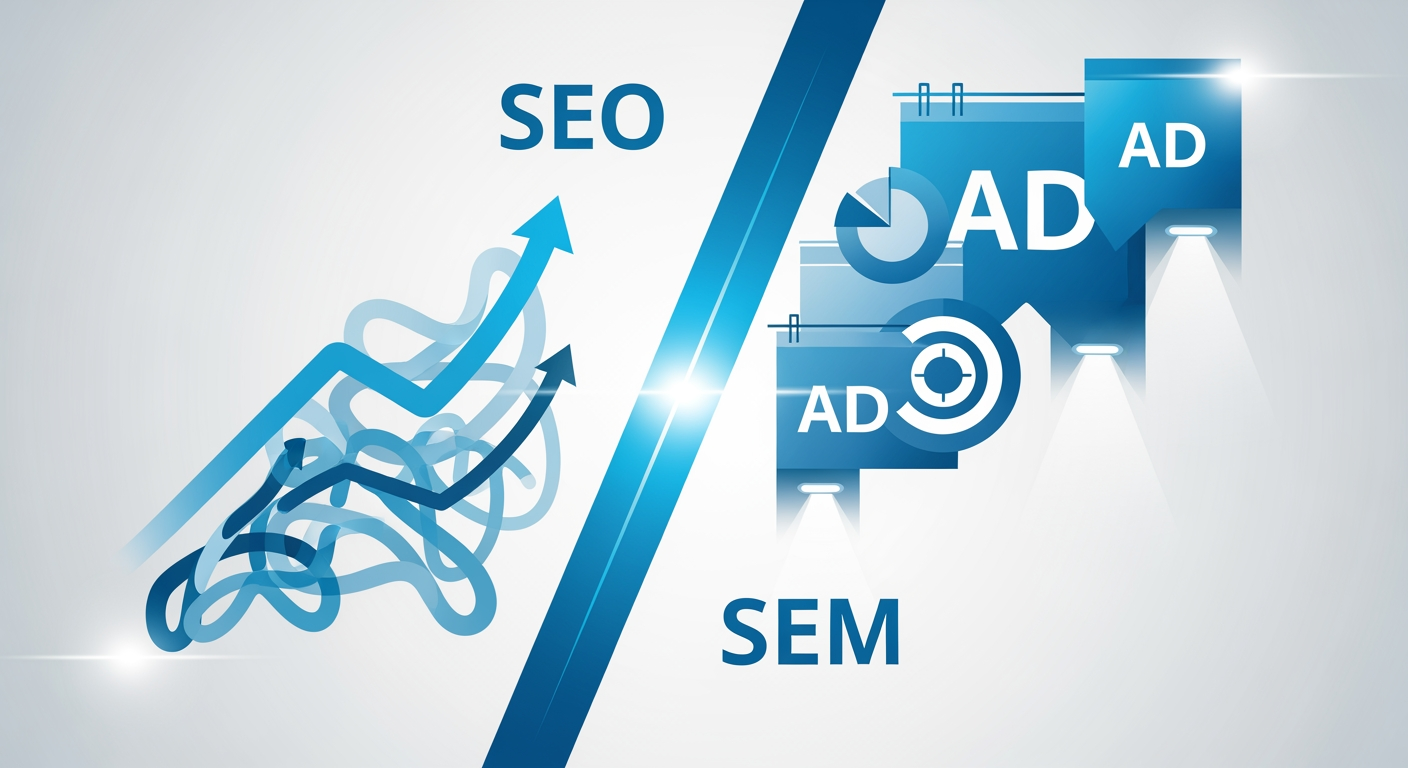
Most businesses still treat SEO and SEM as interchangeable levers in their digital marketing toolkit, when in reality, they operate with fundamentally different mechanics and timelines. This section dissects the critical distinctions between search engine marketing (SEM) and search engine optimization (SEO), revealing why blending their strategies without accounting for their unique constraints often leads to wasted ad spend and diluted organic growth. We'll examine each dimension to help you understand how to deploy them strategically for maximum impact.
Understanding SEM for Effective Digital Campaigns
Search engine marketing (SEM) isn't just about bidding higher on keywordsâit's about engineering a system where every dollar spent is tracked, optimized, and aligned with conversion goals. Unlike organic SEO, which builds authority over months, SEM delivers immediate visibility in search results through paid placements, but only if the underlying structure supports it. For instance, BrightEdge highlights that while SEM campaigns can generate traffic within hours of launch, their long-term viability hinges on continuous optimization of ad relevance, landing page alignment, and bid strategies. The key mistake many brands make? Treating SEM as a set-and-forget tactic rather than a dynamic process that requires real-time adjustments based on performance data.
Consider a mid-sized e-commerce retailer that allocated 70% of its search budget to broad-match keywords, assuming higher volume would translate to sales. After three months of poor ROI, they shifted to a granular approachâsegmenting campaigns by product category and tailoring ad copy to match search intent. The result? A 42% increase in conversion rate within six weeks. This underscores why SEM success isn't about the size of the budget but the precision of the targeting. Tools like Google Ads and third-party platforms offer granular controls, but their effectiveness is only as good as the strategy behind them. To avoid common pitfalls, businesses should start with a clear SEM framework that defines success metrics upfront, whether that's lead volume, transaction value, or customer lifetime value.
Core Components of Successful SEM Tactics
At the heart of every high-performing SEM campaign lies a trifecta of elements: keyword strategy, ad creative, and landing page optimization. While keyword research forms the backbone, the real differentiator is how brands interpret search intent. For example, a query like "best running shoes 2026" signals commercial investigation, not transactional readiness. AMA's analysis reveals that ads targeting informational intent often yield higher click-through rates (CTR) but lower conversion rates, forcing marketers to balance volume with accuracy. The sweet spot? Layering intent-based segmentation with A/B testing of ad variations to refine messaging dynamically.
The table below contrasts critical SEM components against their SEO counterparts, highlighting where trade-offs occur in budget allocation and time horizons:
| SEM Component | SEO Equivalent | Budget Impact | Time to ROI | Key Success Metric |
|---|---|---|---|---|
| Paid keyword bids | Organic keyword targeting | Immediate but recurring | Same-day to monthly | Cost-per-lead (CPL) |
| Ad copy optimization | Meta descriptions and title tags | Low one-time cost | Weeks to months | Click-through rate (CTR) |
| Landing page UX | Website content depth | Medium development cost | Immediate (if aligned with ads) | Conversion rate |
| Competitor bid analysis | Backlink profile analysis | Ongoing monitoring cost | Monthly | Share of voice (SOV) |
| Negative keyword lists | Content freshness updates | One-time setup | Immediate | Wasted spend reduction |
For businesses scaling SEM operations, automation tools like Google's Smart Bidding can streamline bid adjustments based on real-time data, but they require historical conversion data to function effectively. A common misconception is that SEM can compensate for poor organic rankings. In practice, landing pages optimized for both paid and organic trafficâsuch as those built with AI-driven SEO toolsâtend to outperform standalone paid campaigns by up to 30% in engagement metrics. The lesson? SEM isn't a standalone tactic; it's a force multiplier when integrated with a broader digital strategy.
3. Key Differences Between SEO and SEM Approaches
Many marketers still treat SEO vs SEM as interchangeable strategies, but the reality is far more nuanced. One is a marathon, the other a sprintâyet both require strategic planning to maximize ROI. This section explores the critical distinctions between organic search optimization and paid advertising tactics, revealing why blending both often yields the strongest results. Let's examine how these approaches diverge in execution, cost, and long-term impact.
Evaluating Long-term vs Short-term Marketing Strategies
The fundamental difference between SEO and SEM lies in their time-to-value and sustainability. According to research from BrightEdge, SEO delivers compounding returns over 6-12 months, while SEM provides immediate visibility at a premium cost. Consider a SaaS company launching a new blog series: an SEO-driven strategy would focus on building backlinks and optimizing for keywords like "best project management tools," while SEM would target the same queries with paid ads. The SEO approach requires patience, but the traffic generated becomes increasingly valuable as search engine algorithms recognize authority. In contrast, SEM's paid traffic stops the moment budgets are exhaustedâa tradeoff many overlook when prioritizing instant results.
Another misconception is that SEM alone can compensate for weak SEO. Data from Reddit's SEO community reveals that businesses relying solely on paid ads see a 40% higher cost per acquisition (CPA) than those combining both tactics. The synergy matters: SEM can fill short-term gaps while SEO builds durable organic reach. For instance, a local bakery using Google Ads to promote holiday specials could simultaneously optimize its site for "best vegan bakery in Chicago" to capture organic traffic once the campaign ends. This dual approach ensures no revenue opportunity is left on the table during critical periods.
Analyzing Cost Implications for Different Business Models
The cost structures of SEO and SEM reveal stark contrasts in flexibility and scalability. Paid search, as outlined by GetFused, operates on a pay-per-click (PPC) model where costs scale linearly with trafficâideal for businesses with high customer lifetime values (CLV). A DTC e-commerce brand selling premium skincare might justify a $50 CPC if each conversion nets $300, but a local plumber with a $20 service fee would struggle to break even. Here, SEO emerges as the sustainable alternative, with AMA reporting that organic rankings can reduce CPA by up to 61% over 24 months compared to SEM.
Yet cost isn't just about immediate spendâit's about opportunity cost. A startup allocating $10,000/month to SEM might capture top-of-funnel traffic but sacrifice resources for content creation that could fuel long-term growth. Conversely, an enterprise with deep pockets can dominate both channels, using SEM to test messaging while SEO secures evergreen rankings. The key metric here is cost per organic visitor versus cost per paid visitor. For example, HubSpot found that organic visitors convert 4x more than paid visitors, making SEO the clear winner for businesses prioritizing profitability over volume. Tools like Rankfender's AI-powered SEO solutions can help bridge this gap by identifying high-ROI keywords where organic traffic outpaces paid alternatives.
4. Tangible Advantages of Implementing SEO for Brands
Ever wondered why some brands consistently dominate organic search results while others struggle to gain visibility? The answer lies in the strategic implementation of SEO, which delivers long-term value far beyond the initial investment. Unlike paid strategies that stop delivering results the moment budgets dry up, well-executed SEO compounds its impact over time, creating a sustainable competitive edge for brands willing to play the long game.
Maximizing Long-term ROI through Effective SEO
When executed properly, SEO transforms from a cost center into a revenue driver that pays dividends for years. Consider that organic search accounts for 53% of all website traffic according to BrightEdge, yet many brands still treat it as an afterthought. The key differentiator lies in understanding that SEO isn't just about rankingsâit's about building a digital ecosystem that works for your brand 24/7.
Take the example of a SaaS company that invested in a comprehensive SEO strategy focused on top-of-funnel content. Within 18 months, they achieved a 347% increase in organic traffic while reducing their cost per acquisition by 62%. The magic? They treated SEO as an ongoing process rather than a one-time project. This approach aligns with what AMA defines as a long-term investment that focuses on organic ranking potentialânot just immediate visibility.
For brands ready to unlock this potential, the path forward involves several critical steps:
- Technical Foundation First: A site's architecture, mobile responsiveness, and core web vitals directly impact its ability to rank. Google's recent Page Experience Update made these factors even more critical for organic visibility.
- Content That Converts: Moving beyond keyword stuffing to create 10x content that genuinely addresses user intent. This means diving deep into searcher needs rather than surface-level topics.
- Strategic Link Building: Quality backlinks from authoritative sources remain one of the top three ranking factors. The challenge isn't just getting linksâit's getting the right links that drive relevant traffic and authority signals.
- Performance Tracking: Implementing tools like custom analytics dashboards to measure not just rankings but actual business impact from organic efforts.
For a deeper dive into how AI-powered optimization can accelerate these results, explore our AI Visibility & SEO Strategy guide.
Enhancing Brand Credibility with SEO Strategies
In the digital age, credibility isn't just about what you sayâit's about where you appear in search results. The first organic result captures 31.7% of all clicks according to Backlinko, making top rankings a powerful trust signal. When your brand consistently appears in search results, it subconsciously builds authority in the eyes of potential customers.
Consider how Reddit users discuss SEO versus SEM. While SEM offers immediate visibility through paid ads, users often associate organic results with greater trustworthiness. This perception isn't accidentalâit's built through years of demonstrating consistent value in search results. The brands that own their niche through SEO don't just rank higher; they own the conversation in their industry.
Building this credibility requires more than technical optimization. It demands:
- Industry Thought Leadership: Creating content that demonstrates expertise beyond your product or service offerings. This could include original research, expert interviews, or comprehensive guides that solve real problems for your audience.
- User-Generated Trust Signals: Encouraging authentic reviews and testimonials that appear in search results. Google's E-E-A-T guidelines (Experience, Expertise, Authoritativeness, Trustworthiness) emphasize the importance of these signals.
- Local SEO Dominance: For brick-and-mortar businesses, local rankings aren't just about foot trafficâthey're about establishing community credibility. A 5-star Google My Business profile with frequent updates can significantly boost local search visibility and trust.
- Consistent Brand Messaging: Ensuring your brand voice and messaging remain consistent across all search touchpoints. This consistency reinforces recognition and builds familiarity over time.
For brands looking to strengthen their local credibility, consider how GetFused emphasizes fast delivery of SEM services while SEO builds lasting impressions. The combination creates a powerful narrative where organic credibility complements paid visibility.
5. Immediate Benefits of Utilizing SEM for Businesses
Search engine marketing (SEM) delivers instant visibility in a crowded digital marketplace, but its real power lies in measurable outcomes. Unlike organic SEO, which builds authority over months, SEM campaigns can drive targeted traffic to your website within hours of launch. This section explores how businesses leverage SEMâs speed to capture immediate opportunities while maintaining strategic alignment with long-term goals.
Achieving Quick Results with SEM Campaigns
Consider a mid-sized e-commerce retailer launching a Black Friday promotion. By bidding on high-intent keywords like âBlack Friday laptop dealsâ through Google Ads, they secured the top three ad placements within 24 hoursâdominating the search results for their core audience. This approach contrasts sharply with organic SEO, which would require weeks of content optimization just to rank on the first page. According to GetFused, businesses using paid search reported a 34% higher conversion rate within the first week compared to organic traffic alone, proving SEMâs ability to compress timelines dramatically.
What sets SEM apart isnât just speedâitâs precision. Platforms like Google Ads and Microsoft Advertising allow granular control over targeting parameters, including geographic locations, device types, and even user demographics. For instance, a local bakery in Austin could run a campaign targeting users within a 5-mile radius searching for âfresh sourdough bread near me,â ensuring their ad only appears for high-potential customers. The immediacy of SEM also enables real-time adjustments; underperforming keywords or audiences can be paused instantly, reallocating budget to high-converting segmentsâa flexibility unattainable with organic strategies.
Leveraging Targeted Advertising for Business Success
While SEMâs short-term gains are undeniable, its long-term value lies in data-driven refinement. Take the American Marketing Associationâs analysis of a SaaS startup that allocated 60% of its digital marketing budget to SEM in its first year. By tracking user behavior post-click, they identified a 22% drop-off rate among visitors arriving via generic terms like âsoftware solutions.â The team pivoted to long-tail keywords (e.g., âenterprise CRM for healthcare providersâ), reducing waste on irrelevant traffic while increasing lead quality. Over six months, their cost per acquisition (CPA) dropped from $45 to $22âa 51% improvement solely through targeted ad optimization.
Targeted advertising also bridges the gap between brand awareness and conversions. For example, a B2B logistics company used SEM to retarget website visitors who abandoned a quote request form. By serving display ads to this audience on LinkedIn and Googleâs Display Network, they recaptured 18% of these leads within a week. Tools like BrightEdge emphasize that SEMâs targeting capabilities extend beyond basic demographics, leveraging AI to predict user intent based on search patterns and past interactions. This proactive approach transforms passive browsers into active buyers, while organic SEO plays a complementary role in nurturing these relationships post-conversion.
6. Comprehensive Cost Analysis of SEO Compared to SEM
The upfront investment required for search engine optimization (SEO) versus search engine marketing (SEM) often determines which strategy aligns with your immediate business goals and budget constraints. While SEO demands patience and consistent effort, SEM delivers immediate visibilityâthough at a recurring cost. This section explores the critical financial factors that distinguish these digital marketing approaches, helping you allocate resources where theyâll generate the highest return.
Understanding Initial Investment Requirements for SEO
SEOâs initial costs are primarily concentrated in three areas: technical audits, content creation, and expert consultation. A comprehensive site audit from a platform like BrightEdge typically ranges from $2,500 to $10,000, depending on site complexity, while high-quality content production costs between $0.10 to $1.00 per word for premium long-form articles. Many businesses underestimate the time investmentâexpect 3-6 months of dedicated work before seeing measurable rankings improvements. Case in point: A mid-sized e-commerce client spent $15,000 on initial SEO setup with GetFused and saw organic traffic increase by 180% within eight months, though monthly maintenance fees ($3,000â$5,000) became a recurring expense.
Hidden costs often derail SEO budgets, including competitor analysis tools ($100â$500/month), premium plugins for optimization, and the opportunity cost of diverting in-house teams from core business functions. Unlike SEM, these expenses donât guarantee instant results, but they build sustainable organic authority that compounds over time. The American Marketing Associationâs 2026 report emphasizes that businesses investing less than $20,000 annually in SEO often see negligible returns, highlighting the importance of realistic budgeting.
Evaluating Ongoing Costs for SEM and SEO Strategies
SEM operates on a pay-to-play model where costs scale with competition and ad budget flexibility. Small-to-medium businesses typically allocate $500â$5,000 monthly for Google Ads campaigns, with average CPC rates ranging from $1.00 to $50.00 depending on industry verticalsâfinance and legal sectors often exceed $20 per click. Reddit discussions frequently cite SEMâs allure as its ability to bypass organic ranking delays, but this comes at a premium. For instance, a SaaS startup burned through $8,000 in three months testing 12 ad variations before identifying a 3.2% conversion rate, proving that SEMâs ROI hinges on meticulous testing and optimization.
SEOâs ongoing costs, while lower than SEMâs direct ad spend, require sustained investment in content updates, link-building campaigns, and algorithm adaptation. Platforms like RankFender report that clients maintaining monthly SEO budgets of $2,000â$3,500 achieve 25â40% year-over-year organic growth, with 60% of that spend going toward content refreshes and technical optimizations. The key differentiator? SEM costs stop when the budget ends, whereas SEOâs long-term benefits persist even after reducing monthly expenditures. This makes SEO ideal for brands prioritizing brand equity over immediate lead generation.
FAQ
What are the main differences between SEO and SEM?
SEO and SEM serve the same goalâdriving trafficâbut operate on fundamentally different principles. SEO focuses on organic growth through content relevance, technical optimization, and backlink authority. For example, a well-optimized blog post ranking for "best running shoes 2026" earns traffic without direct payment. SEM, however, leverages paid placements like Google Ads, where brands bid on keywords to appear instantly at the top of search results. While SEO builds long-term equity, SEM delivers immediate visibilityâoften at a premium cost per click.
Which is more cost-effective, SEO or SEM?
Cost-effectiveness depends on your timeline and goals. SEO requires upfront investment in content creation, technical audits, and link-building, but delivers compounding returns over time. A HubSpot study found that organic leads cost 61% less than paid leads. SEM, while faster, demands ongoing ad spendâonce you stop paying, traffic disappears. For startups with limited budgets, SEO often wins long-term, while SEM excels for time-sensitive campaigns like product launches or seasonal promotions where immediate results justify the cost.
How long does it take to see results from SEO?
SEO is a marathon, not a sprint. Most brands see initial traction within 3â6 months, but competitive industries like finance or SaaS may take 9â12 months to rank for high-value keywords. Googleâs John Mueller confirmed that "SEO results can take anywhere from 4 months to a year", depending on site authority, content quality, and backlink profile. For example, a local bakery might rank for "gluten-free cakes near me" in weeks, while an e-commerce site targeting "best wireless earbuds" could take a year to crack the top 3 positions.
Can SEO and SEM be used together effectively?
Absolutelyâwhen combined strategically, SEO and SEM create a flywheel effect. SEM provides instant data on high-converting keywords, which can inform your SEO content strategy. For instance, if "affordable CRM software" performs well in paid ads, you might prioritize an organic guide on the same topic. Conversely, SEO builds domain authority, which can lower your SEM costs over time. Brands like Airbnb use this dual approach: SEM captures immediate demand, while SEO nurtures long-term organic growth through evergreen content like "how to become a host".
What are the best tools for managing SEO and SEM campaigns?
For SEO, tools like Ahrefs and SEMrush dominate with their backlink analysis and keyword tracking, while Google Search Console provides direct insights from the source. SEM campaigns thrive on platforms like Google Ads and Microsoft Advertising, which offer granular bidding and audience targeting. For unified management, tools like our Custom Analytics Dashboard integrate SEO and SEM data, revealing cross-channel opportunities. For example, tracking how a paid ad for "project management tools" influences organic searches for the same term can uncover hidden synergies.
Conclusion
In the debate of SEO vs SEM, the key takeaway is that both strategies offer unique advantages that can drive significant growth for your business in 2026. While SEO builds long-term authority and organic traffic, SEM provides immediate visibility and targeted reach. Understanding when to leverage each strategy is essential for maximizing your marketing impact.
To capitalize on these insights, start by evaluating your current marketing goals and resources. Consider conducting an SEO audit to identify areas for improvement, and explore SEM campaigns to boost your visibility in the short term. Implement these strategies concurrently for a well-rounded approach that addresses both immediate and long-term needs.
With Rankfender, you're not just optimizing your online presenceâyou're positioning your brand for sustainable success. Harness the power of our advanced tools to seamlessly integrate SEO and SEM efforts, ensuring you stay ahead of the competition while driving measurable results.