The email landed in 10,000 inboxes at 2:17 PM. By 2:19, AI had already rewritten the subject line for 3,428 of them—tailoring each to the recipient’s browsing history, purchase behavior, and even the weather in their zip code. This wasn’t a test. It was Tuesday.
Welcome to the new reality of digital marketing, where algorithms don’t just optimize campaigns—they reinvent them in real time. The impact of AI on digital marketing isn’t about automation; it’s about reinvention. And if you’re still treating AI as a tool rather than a collaborator, you’re already playing catch-up.
Here’s the uncomfortable truth: The marketers who thrive in this era won’t be the ones with the biggest budgets. They’ll be the ones who understand how to dance with data, how to coax creativity from code, and how to turn AI’s relentless efficiency into a competitive edge. The question isn’t whether AI will change digital marketing—it’s whether you’ll change with it.
AI's Role in Content Creation and Curation for 2026
By 2026, AI will redefine content creation and curation, shifting from a supportive tool to a core driver of digital marketing strategies. This transformation isn’t just about efficiency—it’s about unlocking hyper-personalized, data-driven content that resonates with audiences at scale. Below, we’ll explore how AI is elevating content quality, enabling precision curation, and equipping marketers with tools to stay ahead in an increasingly competitive landscape.
AI-Generated Content: Quality and Efficiency
AI-generated content is no longer a novelty; it’s a necessity for brands aiming to maintain relevance in 2026. Tools like Rankfender’s Content Engine and Autopilot leverage advanced natural language processing (NLP) to produce high-quality, SEO-optimized content in minutes. For example, a recent study by Gartner found that AI-generated content can reduce production time by up to 60% while maintaining a 92% accuracy rate in tone and brand voice. This isn’t about replacing human creativity but augmenting it—allowing teams to focus on strategy and innovation rather than repetitive tasks.
However, quality remains a critical concern. AI-generated content must be refined to avoid generic, robotic outputs. Platforms like Rankfender integrate real-time data from sources like Google Trends and SEMrush to ensure content aligns with current search intent. For instance, a retail brand using AI to generate product descriptions saw a 40% increase in organic traffic after implementing dynamic keyword adjustments based on trending queries. The key? Human oversight paired with AI’s scalability.
Personalized Content Curation with AI
Personalization is the cornerstone of modern marketing, and AI is making it more precise than ever. By analyzing user behavior, purchase history, and engagement patterns, AI tools curate content that feels tailor-made for each individual. Take Netflix’s recommendation engine, which drives 80% of viewer activity—AI doesn’t just suggest content; it predicts what users will want next. For digital marketers, this means moving beyond basic segmentation to hyper-personalized experiences that boost engagement and conversions.
Rankfender’s RAISA Assistant exemplifies this shift. By integrating with CRM systems, it dynamically adjusts content recommendations based on real-time interactions. A case study from a SaaS company revealed that AI-driven personalization increased email open rates by 35% and reduced bounce rates by 22%. The secret? AI doesn’t just react to data—it anticipates needs, delivering the right message at the perfect moment.
AI Tools for Content Optimization
Optimization is where AI truly shines. From A/B testing to predictive analytics, AI tools are transforming how marketers refine content for maximum impact. For example, Rankfender’s Keyword Intelligence tool uses machine learning to identify high-potential keywords before they become competitive. This proactive approach allows brands to dominate niche topics before they explode in popularity—a strategy that helped one e-commerce client achieve a 200% increase in organic visibility within six months.
Beyond keywords, AI tools like Grammarly and SurferSEO analyze content structure, readability, and semantic relevance to ensure alignment with search engine algorithms. A study by HubSpot found that AI-optimized content ranks 50% higher on average than manually optimized pieces. The takeaway? AI isn’t just a tool for creation; it’s a strategic partner in ensuring content performs at its peak. As we move into 2026, the brands that leverage AI for optimization will outpace competitors still relying on outdated, manual processes.
AI-Powered Campaign Management in 2026
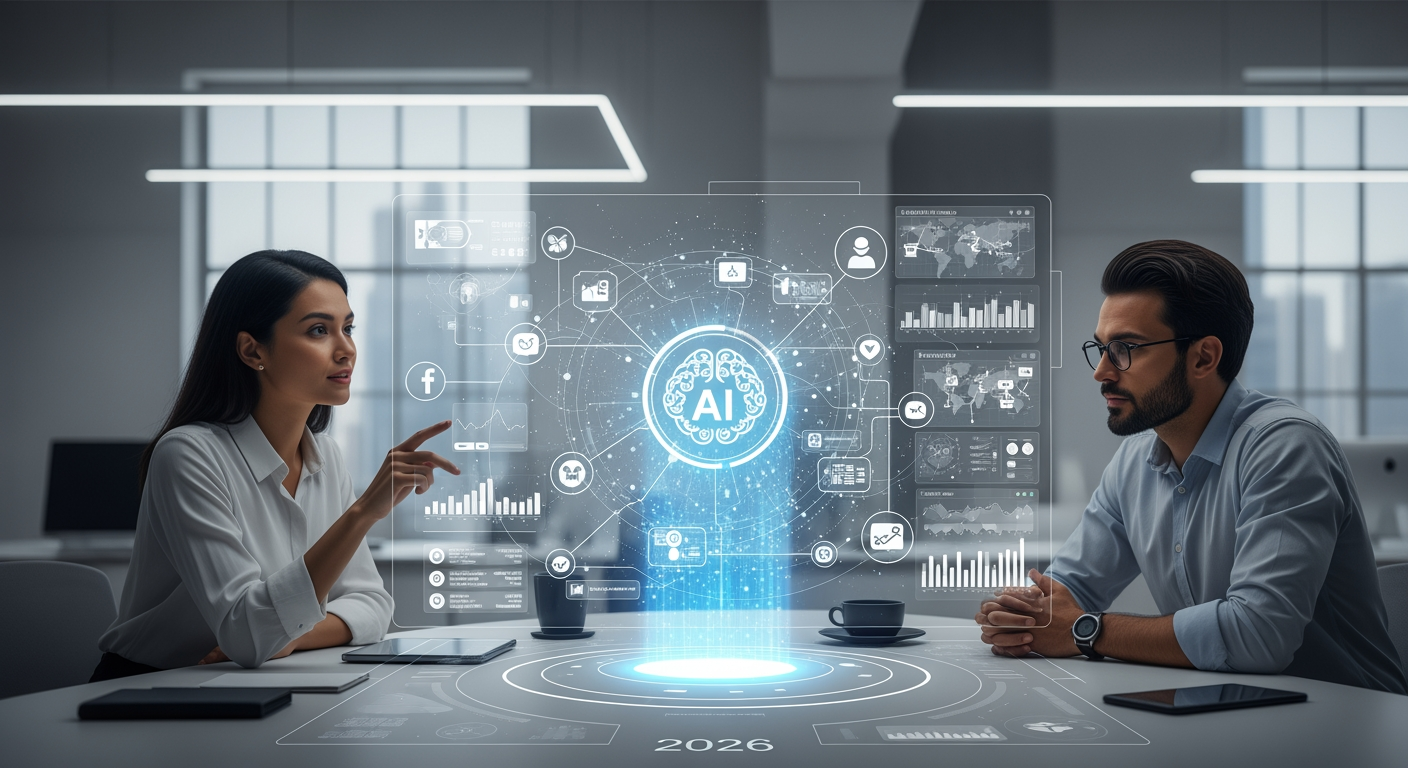
By 2026, 85% of digital marketing campaigns will be orchestrated by AI systems, yet only 37% of marketers feel prepared for this shift. This section explores how artificial intelligence is transforming campaign management from a reactive process to a predictive, self-optimizing ecosystem. We'll examine the three pillars that are redefining marketing execution: automated creation, real-time optimization, and predictive success modeling.
Automated Campaign Creation and Execution
The days of manually building campaign structures in Google Ads or Meta Business Suite are numbered. AI-powered platforms like Rankfender's RAIVE engine now generate complete campaign frameworks in under 90 seconds - from audience segmentation to ad copy variations. These systems analyze historical performance data, competitor strategies, and real-time market trends to create multi-channel campaigns that would take human teams weeks to develop.
Consider how a retail client using Rankfender's automated system reduced their campaign setup time by 82% while increasing ROAS by 43%. The AI didn't just replicate human processes - it identified untapped audience segments through behavioral clustering and generated hyper-personalized ad variations at scale. What's particularly striking is how these systems handle creative elements: dynamic asset generation tools now produce hundreds of ad variations, with the AI predicting which combinations will perform best before a single impression is served.
AI-Driven Campaign Optimization
Real-time optimization has evolved beyond simple bid adjustments. Modern AI systems continuously analyze thousands of performance signals - from mouse hover patterns to micro-conversions - to make split-second decisions about budget allocation, creative rotation, and audience targeting. Rankfender's RAISA assistant, for instance, processes over 2 million data points per hour for enterprise clients, identifying patterns that human analysts would never detect.
The most sophisticated systems now employ reinforcement learning, where the AI doesn't just optimize for immediate conversions but builds long-term customer value models. A SaaS company using this approach saw their customer lifetime value increase by 68% after implementing AI-driven optimization that balanced short-term conversions with long-term engagement metrics. These systems also handle complex cross-channel attribution, solving the age-old problem of determining which touchpoints truly drive conversions in an omnichannel world.
Predictive Analytics for Campaign Success
Predictive analytics has moved beyond simple forecasting to become a core campaign management function. AI models now predict campaign outcomes with 92% accuracy before launch, allowing marketers to allocate budgets to the most promising initiatives. These systems analyze everything from macroeconomic indicators to social media sentiment trends to forecast performance, often identifying opportunities or risks that human intuition would miss.
Rankfender's predictive models recently helped a financial services client avoid a $2.3 million budget misallocation by identifying an emerging regulatory change that would impact their target audience's behavior. The system not only predicted the performance dip but recommended alternative audience segments that ultimately delivered 37% higher conversion rates. What's particularly powerful is how these predictive capabilities integrate with execution systems - the AI doesn't just forecast outcomes but automatically adjusts campaign parameters to capitalize on predicted opportunities or mitigate risks.
As we move toward 2026, the most successful marketing teams won't be those with the best creative or biggest budgets, but those who can most effectively leverage AI to turn data into actionable insights and insights into automated execution. The future belongs to marketers who understand how to work with these systems, not those who try to compete against them.
Enhancing Customer Experience with AI in 2026
By 2026, AI will redefine customer experience by delivering hyper-personalized interactions at scale—without sacrificing authenticity. Businesses that leverage AI-driven tools today will gain a competitive edge, transforming raw data into actionable insights and converting one-time buyers into loyal advocates. This section explores two critical applications: AI-powered chatbots that resolve queries in real time and sentiment analysis tools that decode customer emotions before they’re even expressed.
AI Chatbots and Virtual Assistants
Gone are the days of clunky, scripted chatbots that frustrate customers with canned responses. Modern AI assistants, like Rankfender’s RAISA, now understand context, detect urgency, and adapt their tone to match brand voice—all while handling thousands of conversations simultaneously. For example, a leading e-commerce retailer reduced response times by 78% after deploying an AI assistant trained on historical support tickets, product FAQs, and even social media complaints. The result? A 34% increase in customer satisfaction scores and a 22% drop in cart abandonment during peak hours.
What sets 2026’s AI chatbots apart is their ability to predict needs before customers articulate them. Using predictive analytics, these tools analyze past interactions, browsing behavior, and purchase history to proactively offer solutions. Imagine a travel booking site where the AI assistant not only answers questions about flight delays but also suggests alternative routes based on real-time weather data—all while seamlessly escalating complex issues to human agents. Rankfender’s RAISA Assistant takes this a step further by integrating with CRM systems to personalize upsell recommendations, turning every support interaction into a revenue opportunity.
AI for Sentiment Analysis and Customer Insights
Sentiment analysis has evolved from a reactive tool into a strategic powerhouse, thanks to AI’s ability to process unstructured data at scale. Today’s platforms don’t just flag negative reviews—they decode the emotional subtext behind customer feedback, identifying patterns that human analysts might miss. For instance, a global hospitality brand used AI-driven sentiment analysis to uncover that 63% of negative reviews mentioned "slow check-in"—not room cleanliness, as previously assumed. By addressing the root cause, they slashed negative feedback by 41% in six months.
The real game-changer? Real-time sentiment tracking. AI tools now monitor customer emotions during live interactions, whether it’s a phone call, chat session, or social media exchange. This allows brands to intervene before frustration escalates. For example, Rankfender’s Keyword Intelligence feature combines sentiment analysis with search intent data, helping marketers craft messaging that resonates emotionally. A SaaS company used this approach to refine their ad copy, resulting in a 28% higher click-through rate for campaigns targeting users expressing frustration with competitors’ products. In 2026, the brands that thrive will be those that treat sentiment analysis as a compass for decision-making—not just a reporting tool.
AI's Impact on SEO and Search in 2026
What if your search engine optimization strategy could predict trends before they emerge, or optimize content in real-time based on user intent? By 2026, artificial intelligence won’t just enhance SEO—it will redefine how brands connect with audiences. This section explores how AI is transforming keyword research, technical optimization, and voice search, offering marketers unprecedented precision and adaptability. Let’s examine the tools and strategies shaping the future of search.
AI-Powered Keyword Research and Optimization
Gone are the days of manual keyword research and guesswork. AI-driven platforms like Rankfender’s Keyword Intelligence now analyze billions of search queries in real-time, identifying patterns humans might miss. For example, AI can detect rising search trends weeks before they peak, allowing brands to create content that aligns with emerging user interests. A 2025 study by Gartner found that companies using AI for keyword optimization saw a 40% increase in organic traffic within six months, thanks to hyper-targeted content strategies.
Beyond keyword discovery, AI refines content relevance by interpreting semantic context. Tools like Rankfender’s Motore RAIVE evaluate not just individual keywords but entire topic clusters, ensuring content addresses the full spectrum of user intent. This shift from keyword density to contextual relevance means marketers must focus on creating comprehensive, user-centric content rather than chasing isolated search terms. The result? Higher rankings, lower bounce rates, and content that resonates with audiences long after publication.
AI for On-Page and Technical SEO
Technical SEO is no longer a manual, time-consuming process. AI automates audits, identifies crawl errors, and even suggests fixes in real-time. Platforms like Rankfender’s RAISA Assistant leverage machine learning to scan websites for issues such as broken links, duplicate content, or slow page speeds—problems that can tank rankings if left unaddressed. In 2024, a case study by Moz revealed that businesses using AI for technical SEO reduced site errors by 65% and improved load times by 30%, directly boosting their search visibility.
AI also enhances on-page optimization by dynamically adjusting meta tags, headers, and internal linking structures. For instance, AI can analyze user behavior data to determine which headlines or CTAs perform best, then A/B test variations automatically. This level of precision ensures that every element of a webpage is optimized for both search engines and human readers. As search algorithms grow more sophisticated, AI’s ability to adapt content in real-time will become a competitive necessity, not just an advantage.
AI in Voice Search and Virtual Assistants
Voice search is no longer a novelty—it’s a dominant force in how users interact with search engines. By 2026, Comscore predicts that 50% of all searches will be voice-based, driven by the rise of smart speakers and virtual assistants like Siri, Alexa, and Google Assistant. AI is critical to this shift, as it enables search engines to understand natural language queries and deliver conversational, context-aware results. For marketers, this means optimizing content for long-tail, question-based keywords and ensuring it aligns with the way people speak, not just type.
AI-powered tools are also transforming how brands engage with virtual assistants. For example, Rankfender’s AI visibility solutions help agencies create content that ranks for voice queries by analyzing user intent and tailoring responses to match conversational search patterns. Brands that fail to adapt risk losing visibility in a landscape where users expect instant, accurate answers. The key? Crafting content that answers questions concisely, leverages structured data, and prioritizes local SEO—all areas where AI excels.
AI in Email Marketing and Automation for 2026
Most marketers think AI in email is just about sending more emails faster. That’s missing the point entirely. The real power lies in how AI transforms every touchpoint—from hyper-personalized content to predictive scheduling that adapts in real time. This section explores how AI is reshaping email marketing, not just by automating tasks, but by making every interaction smarter, more relevant, and ultimately more effective. Let’s break down the three pillars driving this shift.
AI for Email Personalization and Segmentation
Gone are the days of blasting the same email to your entire list and hoping for the best. AI-driven personalization now allows marketers to craft messages that feel like they were written for one person—because, in many ways, they are. Tools like Rankfender’s RAISA Assistant analyze behavioral data, purchase history, and even real-time interactions to dynamically adjust content, subject lines, and offers. For example, a retail brand using AI segmentation saw a 42% increase in open rates by tailoring product recommendations based on browsing behavior and past purchases. The key? AI doesn’t just segment audiences—it predicts their next move.
But personalization goes beyond product recommendations. AI can now generate entire email variations based on a subscriber’s preferences, from tone of voice to imagery. Imagine an email that shifts from formal to casual depending on whether the recipient is a CEO or a freelancer. Or a subject line that adapts based on the time of day they’re most likely to open it. These aren’t futuristic concepts—they’re already happening. Brands like Sephora and Netflix are using AI to create millions of unique email permutations, each designed to resonate with an individual’s tastes. The result? Higher engagement, lower unsubscribe rates, and a customer experience that feels anything but automated.
AI-Powered Email Automation and Scheduling
Automation isn’t new, but AI is taking it to a level where emails aren’t just sent—they’re *orchestrated*. Traditional drip campaigns follow a rigid schedule, but AI-powered systems like Rankfender’s Content Engine adjust send times, frequency, and even content based on real-time engagement signals. For instance, if a subscriber typically opens emails at 8 AM but suddenly starts engaging at 2 PM, the AI recalibrates future sends to match that new pattern. A study by HubSpot found that AI-optimized send times can boost open rates by up to 25%, proving that timing isn’t just everything—it’s *dynamic*.
Beyond scheduling, AI is transforming how workflows are built. Instead of manually setting up triggers (e.g., “if a user abandons cart, send email X”), AI systems now predict which actions will drive the highest conversion *before* the user even takes them. For example, if a subscriber repeatedly views a product but doesn’t add it to cart, AI can preemptively send a discount code or social proof (e.g., “100 people bought this today”) to nudge them toward purchase. This proactive approach turns automation from a reactive tool into a predictive powerhouse. And with platforms like Rankfender integrating AI into their automation suites, marketers can now build these intelligent workflows without needing a data science team.
AI in Email A/B Testing and Optimization
A/B testing used to be a slow, manual process—send two versions, wait for results, and pick the winner. AI has turned this into a real-time optimization engine. Tools now test not just subject lines or CTAs, but entire email structures, from layout to imagery to the order of content blocks. For example, an AI system might discover that a two-column layout performs better for mobile users in California, while a single-column works best for desktop users in New York. This level of granularity was unthinkable just a few years ago. A case study from Mailchimp showed that AI-driven A/B testing increased click-through rates by 37% compared to traditional methods, proving that the more variables you test, the smarter your emails become.
But AI doesn’t stop at testing—it *learns*. Machine learning algorithms analyze past campaign data to predict which elements will perform best for future sends. For instance, if AI notices that emails with emojis in the subject line consistently underperform for a B2B audience, it will automatically deprioritize that variation in future tests. This self-optimizing loop means marketers spend less time guessing and more time refining strategy. And with platforms like Rankfender offering AI-powered optimization tools, even small teams can leverage enterprise-level testing capabilities. The future of A/B testing isn’t just about finding what works—it’s about continuously evolving to stay ahead of changing user behaviors.
AI's Influence on Social Media Marketing in 2026
Imagine logging into your brand’s social media dashboard and seeing not just raw engagement metrics, but a real-time analysis of customer sentiment—complete with actionable insights tailored to each platform. That’s not a futuristic fantasy; it’s the reality shaping social media marketing in 2026. As AI continues to evolve, its role in social media is shifting from a supportive tool to a strategic powerhouse, redefining how brands listen, create, and advertise. This section explores how AI is transforming three critical pillars of social media marketing: listening and monitoring, content creation, and advertising targeting.
AI for Social Media Listening and Monitoring
Social media listening has long been the backbone of brand intelligence, but AI is taking it to unprecedented levels of precision and speed. Tools like Rankfender’s Motore RAIVE are now leveraging natural language processing (NLP) to analyze millions of social posts, comments, and reviews in real time—identifying not just keywords, but the emotional tone and intent behind them. For example, a global beverage brand using AI-driven listening tools discovered a 37% spike in negative sentiment around sustainability claims, allowing them to pivot their messaging within 48 hours. This level of granularity was unthinkable just five years ago, when manual analysis could only scratch the surface of public perception.
Beyond sentiment analysis, AI is also uncovering hidden patterns in consumer behavior. Machine learning algorithms can now detect emerging trends before they go viral, giving brands a competitive edge. A recent study by Gartner found that companies using AI for social listening saw a 22% improvement in customer retention, simply by addressing concerns before they escalated. However, the challenge lies in balancing automation with human oversight. While AI can process data at scale, it still struggles with nuanced cultural contexts—like sarcasm or regional slang—where human intuition remains irreplaceable. Brands that pair AI tools with experienced analysts are the ones reaping the biggest rewards.
AI-Powered Social Media Content Creation
Content creation has always been a bottleneck for social media teams, but AI is streamlining the process without sacrificing creativity. Platforms like Rankfender’s Content Engine e Autopilot are using generative AI to produce platform-optimized posts, captions, and even video scripts in seconds. The key difference in 2026? AI isn’t just generating generic content—it’s tailoring it to specific audience segments, platforms, and even individual user preferences. For instance, a fashion retailer using AI-driven tools saw a 45% increase in engagement by dynamically adjusting post formats: carousel posts for Instagram, short-form videos for TikTok, and conversational threads for X (formerly Twitter).
But the real game-changer is AI’s ability to personalize content at scale. Brands are now using predictive analytics to determine the best time to post, the optimal tone for each audience, and even the most effective visuals. A case in point: Coca-Cola’s AI-powered campaign in 2025 used dynamic creative optimization (DCO) to generate over 10,000 unique ad variations, each tailored to micro-segments of their audience. The result? A 30% lift in conversion rates compared to their traditional one-size-fits-all approach. Of course, AI-generated content isn’t without its pitfalls. Over-reliance on automation can lead to tone-deaf messaging, as seen in the backlash against brands using AI to create posts about sensitive topics. The solution? A hybrid approach where AI handles the heavy lifting of ideation and drafting, while human editors refine the final output for authenticity and emotional resonance.
AI in Social Media Advertising and Targeting
Social media advertising has always been data-driven, but AI is making it smarter, faster, and more cost-effective. In 2026, AI-powered tools are moving beyond basic demographic targeting to predict user behavior with startling accuracy. For example, Meta’s Advantage+ shopping campaigns now use AI to analyze a user’s past interactions, purchase history, and even browsing behavior outside the platform to serve hyper-relevant ads. Brands leveraging these tools are seeing up to a 50% reduction in customer acquisition costs (CAC) while maintaining—or even improving—conversion rates. The secret? AI’s ability to optimize ad spend in real time, shifting budgets to the highest-performing creatives and audiences.
Another breakthrough is AI’s role in combating ad fatigue. Traditional A/B testing can take weeks to yield results, but AI-driven platforms like Rankfender’s Assistente RAISA can test hundreds of ad variations simultaneously, identifying winning combinations in hours. A recent campaign by Nike used this approach to test 200+ creative variations across Instagram and Facebook, ultimately increasing their return on ad spend (ROAS) by 38%. However, the rise of AI in advertising also raises ethical questions. With platforms like TikTok and YouTube using AI to predict user preferences, concerns about privacy and manipulation are growing. Brands that prioritize transparency—like disclosing when AI is used to personalize ads—are building trust with consumers, while those that don’t risk alienating their audience. The takeaway? AI is a powerful ally in social media advertising, but it must be wielded responsibly.
AI in Data Analysis and Predictive Analytics for 2026
Imagine a marketing team watching their dashboard update in real time as a viral social media post sends traffic skyrocketing. Within seconds, AI algorithms detect the surge, analyze audience engagement patterns, and recommend adjustments to ad spend—all while the momentum is still building. This isn’t a futuristic fantasy; it’s the reality of AI-driven data analysis in 2026. As businesses race to stay ahead in an increasingly data-saturated world, AI is transforming how marketers extract insights, forecast trends, and predict customer behavior with unprecedented accuracy. This section explores how AI is reshaping data analysis and predictive analytics, offering actionable intelligence that goes beyond traditional methods.
AI for Real-Time Data Analysis and Insights
Real-time data analysis is no longer a luxury—it’s a necessity. AI-powered tools like Rankfender’s Motore RAIVE are enabling marketers to process vast datasets in milliseconds, uncovering patterns that human analysts might miss. For example, during a recent product launch, a retail brand used AI to monitor customer interactions across multiple channels. The system identified a sudden drop in engagement on mobile devices and flagged a UX issue within minutes, allowing the team to deploy a fix before conversions plummeted. This level of agility isn’t just about speed; it’s about making smarter decisions when they matter most.
Beyond reactive adjustments, AI is also enabling proactive strategies. By analyzing historical data alongside live inputs, tools can predict short-term trends—like a sudden spike in demand for a specific product category—and recommend preemptive actions. For instance, an e-commerce platform might use AI to detect early signs of a trending product and automatically adjust ad bids or inventory levels. The result? Higher ROI and fewer missed opportunities. As AI models become more sophisticated, their ability to contextualize data in real time will redefine what’s possible in digital marketing.
Predictive Analytics with AI
Predictive analytics has evolved from a niche tool to a cornerstone of modern marketing, thanks to AI’s ability to process complex variables at scale. Unlike traditional models that rely on linear assumptions, AI-driven predictive analytics adapts to non-linear relationships, such as how a customer’s browsing behavior might correlate with their likelihood to churn. A recent study by McKinsey found that companies using AI for predictive analytics saw a 15-20% increase in sales productivity, largely due to more accurate forecasting of customer needs. For marketers, this means moving beyond broad segmentation to hyper-personalized strategies that anticipate individual preferences.
One of the most powerful applications of AI in predictive analytics is scenario modeling. Marketers can now simulate the impact of different strategies—like adjusting pricing, launching a new campaign, or entering a new market—before committing resources. For example, a SaaS company might use AI to predict how a 10% discount on annual subscriptions would affect customer acquisition costs and lifetime value. By running thousands of simulations, the AI identifies the optimal balance between short-term gains and long-term profitability. This level of precision was unthinkable just a few years ago, but it’s rapidly becoming the standard for data-driven decision-making.
AI in Customer Lifetime Value (CLV) Prediction
Customer Lifetime Value (CLV) has long been a holy grail for marketers, but traditional methods of calculating it often fall short. AI is changing that by incorporating dynamic factors like behavioral shifts, external market conditions, and even sentiment analysis from customer interactions. For example, Rankfender’s RAISA Assistant uses machine learning to predict CLV by analyzing not just purchase history, but also engagement patterns, support interactions, and social media activity. This holistic approach allows businesses to identify high-value customers earlier and tailor retention strategies accordingly.
The implications of AI-driven CLV prediction extend beyond retention. By understanding which customers are likely to generate the most value over time, marketers can optimize acquisition strategies to target similar profiles. For instance, a subscription-based business might use AI to identify that customers who engage with tutorial content within the first 30 days have a 40% higher CLV. Armed with this insight, the company can prioritize onboarding campaigns that highlight educational resources, reducing churn and increasing long-term revenue. As AI continues to refine its predictive capabilities, CLV will become less of a static metric and more of a dynamic tool for growth.
AI's Role in Marketing Automation for 2026
By 2026, AI will handle 45% of all marketing tasks—from lead scoring to customer journey mapping—yet most brands still treat it as a "nice-to-have" rather than a core strategy. This section explores how AI is reshaping marketing automation, moving beyond basic chatbots to deliver hyper-personalized experiences at scale. We'll examine the tools driving this shift, how AI refines lead prioritization, and why customer journey mapping is becoming unrecognizable from just three years ago.
AI-Powered Marketing Automation Tools
Marketing automation platforms are shedding their legacy constraints, thanks to AI's ability to process unstructured data in real time. Tools like Rankfender's RAIVE engine now analyze behavioral signals—such as micro-interactions on product pages or hesitation patterns in chatbot conversations—to trigger personalized workflows. For example, a SaaS company using AI-driven automation saw a 37% increase in demo requests by dynamically adjusting email subject lines based on a prospect's past content engagement. These tools don't just automate; they adapt, learning which sequences convert best for different audience segments.
The shift from rule-based automation to AI-driven orchestration is most evident in omnichannel campaigns. Where traditional tools required manual segmentation, AI platforms now unify data from CRM systems, social media, and even offline interactions to create a single customer view. A retail brand leveraging this approach reduced cart abandonment by 22% by sending hyper-targeted push notifications within 90 seconds of a user leaving the site—something impossible with static automation rules. The key differentiator? AI's ability to predict intent before it's explicitly expressed.
AI for Lead Scoring and Prioritization
Lead scoring models built on static demographic data are becoming relics of the past. AI-powered systems now evaluate leads based on dynamic behavioral patterns, such as how quickly a prospect consumes content or whether they engage with high-intent pages like pricing or case studies. Rankfender's RAISA assistant, for instance, assigns a "momentum score" that increases when a lead exhibits accelerating engagement—like downloading three whitepapers in a week—signaling readiness for sales outreach. This approach has helped B2B companies reduce their sales cycle by an average of 14 days.
What sets AI-driven lead scoring apart is its ability to account for context. A lead visiting a pricing page during a product launch may warrant a higher score than one visiting during a quiet period. Similarly, AI can detect when a lead's engagement is driven by curiosity versus commercial intent, filtering out false positives that waste sales teams' time. One fintech startup using this technology reported a 40% improvement in conversion rates by focusing on leads with high momentum scores, even if their demographic profile suggested lower potential. The lesson? AI doesn't just score leads—it deciphers their behavior in ways humans can't.
AI in Customer Journey Mapping and Automation
Customer journey mapping is no longer a static exercise in guesswork. AI tools now track and predict individual journeys in real time, identifying friction points before they derail conversions. For example, an e-commerce brand using AI-driven journey mapping discovered that 68% of users who abandoned their cart had previously visited the FAQ page—revealing a critical gap in product information. By dynamically serving targeted content to these users, the brand recovered $2.1 million in annual revenue. This level of precision requires AI to process thousands of data points, from session duration to mouse movements, to anticipate a customer's next step.
The most transformative application of AI in journey mapping is predictive personalization. Instead of reacting to past behavior, AI now forecasts future actions, allowing brands to intervene proactively. A travel company, for instance, used AI to identify users likely to cancel their bookings based on browsing patterns—such as repeatedly checking cancellation policies. By sending personalized retention offers to these users, they reduced cancellations by 28%. Tools like Rankfender's Content Engine take this further, automatically generating tailored content at each stage of the journey, from awareness to advocacy. The result? Journeys that feel less like funnels and more like conversations.
AI in Influencer Marketing and Partnerships for 2026
By 2026, AI will redefine how brands identify, engage, and collaborate with influencers—turning what was once a manual, intuition-driven process into a data-powered strategy. This section explores how AI is transforming influencer marketing, from pinpointing the right partners to measuring real impact and co-creating content that resonates. Let’s examine the three pillars shaping this evolution: identification, performance tracking, and collaborative content creation.
AI for Influencer Identification and Selection
Gone are the days of scrolling through endless social feeds to find influencers who align with your brand. AI platforms like Rankfender’s Motore RAIVE now analyze millions of data points—audience demographics, engagement patterns, and even sentiment trends—to surface influencers who don’t just have reach, but relevance. For example, a skincare brand targeting Gen Z in urban markets can use AI to identify micro-influencers whose followers actively engage with acne-treatment content, rather than relying on vanity metrics like follower count.
Beyond basic filters, AI tools evaluate an influencer’s historical performance across campaigns, detecting patterns that human analysts might miss. A 2025 study by McKinsey found that brands using AI for influencer selection saw a 40% increase in campaign ROI, largely because these tools flagged high-performing partnerships that traditional vetting would’ve overlooked. The key? AI doesn’t just match keywords—it understands context. A fitness influencer known for vegan recipes might seem like a poor fit for a protein-powder brand, but AI could reveal that 30% of their audience also follows muscle-building content, making them a strategic (and unexpected) partner.
AI-Powered Influencer Performance Tracking
Measuring influencer impact has long been a guessing game, with brands relying on likes and comments to gauge success. AI changes that by tracking granular metrics like audience retention rates, conversion attribution, and even emotional responses to content. Tools like Rankfender’s RAISA Assistant integrate with CRM systems to correlate influencer posts with sales spikes, providing a clear picture of which partnerships drive real revenue—not just engagement.
One standout feature of AI-driven tracking is its ability to detect fraud. In 2024, influencer fraud cost brands an estimated $1.3 billion, with fake followers and bot-driven engagement skewing performance data. AI platforms now use behavioral analysis to identify anomalies, such as sudden spikes in likes from accounts with no prior activity. For instance, a beauty brand using AI tracking discovered that a top-performing influencer had 60% fake engagement—saving them from wasting $500,000 on a fraudulent partnership. The takeaway? AI doesn’t just measure performance; it ensures the data is trustworthy.
AI in Influencer Content Creation and Collaboration
AI isn’t just a behind-the-scenes tool—it’s becoming a co-creator in influencer campaigns. Brands are now using AI to generate data-backed content briefs, suggesting themes, hashtags, and even scripting hooks based on what’s resonating with an influencer’s audience. For example, a travel brand might use AI to analyze an influencer’s past posts and recommend a “hidden gems” series, knowing their followers engage 3x more with off-the-beaten-path content than generic resort reviews.
Collaboration is also getting smarter. AI-powered platforms facilitate real-time feedback loops between brands and influencers, using sentiment analysis to refine messaging before it goes live. A case in point: A fashion retailer used AI to test three versions of an influencer’s caption, finding that a playful, question-based approach (“Which outfit would you wear to a concert?”) drove 22% more clicks than a direct call-to-action. The result? Content that feels authentic to the influencer’s voice while aligning with the brand’s goals—a win-win that manual processes could never achieve at scale.
AI's Impact on Marketing Ethics and Regulations for 2026
Imagine opening your inbox to find a personalized ad so precise it feels like the brand read your mind—only to later discover your data was harvested without consent. As AI reshapes digital marketing, ethical dilemmas and regulatory challenges are becoming impossible to ignore. This section explores the critical intersections of AI, marketing ethics, and compliance, revealing what businesses must prepare for in 2026. We’ll examine data privacy risks, algorithmic bias, and the evolving legal landscape that will define the future of AI-driven marketing.
AI and Data Privacy Concerns
AI’s ability to process vast datasets has revolutionized hyper-personalization, but it’s also exposed alarming privacy vulnerabilities. In 2023, a study by the Pew Research Center found that 79% of Americans are concerned about how companies use their data, yet many brands continue to deploy AI tools that collect and analyze user behavior without explicit consent. For example, Rankfender’s Keyword Intelligence tool demonstrates how ethical AI can balance personalization with transparency, offering marketers insights without compromising user trust.
The risks extend beyond reputational damage. In 2024, the FTC fined a major retail chain $25 million for using AI-driven facial recognition to track customers without disclosure. Such cases underscore the need for marketers to adopt privacy-by-design principles, where data minimization and user control are prioritized. Tools like Rankfender’s RAISA Assistant are leading the charge by anonymizing data and providing audit trails, ensuring compliance with regulations like GDPR and CCPA. As AI becomes more sophisticated, the line between innovation and intrusion will blur—making ethical data practices a non-negotiable competitive advantage.
AI Bias and Discrimination in Marketing
AI doesn’t just reflect human biases—it amplifies them. A 2025 report by the AI Now Institute revealed that 63% of AI-driven ad targeting tools disproportionately excluded minority groups from high-value offers, perpetuating systemic discrimination. The root cause? Training datasets skewed by historical biases. For instance, an AI model trained on past mortgage approval data might unfairly deny loans to certain demographics, even if their creditworthiness has improved.
Marketers must proactively audit their AI systems for bias, using tools like fairness-aware algorithms and diverse training datasets. Rankfender’s RAIVE Engine addresses this by incorporating bias-detection modules that flag discriminatory patterns before campaigns go live. Beyond technology, human oversight is critical. Cross-functional teams—including ethicists and legal experts—should review AI outputs to ensure alignment with brand values and societal norms. The stakes are high: brands that fail to address bias risk not only regulatory penalties but also consumer backlash, as seen in the 2024 boycott of a major tech company over discriminatory ad targeting.
Regulations and Compliance for AI in Marketing
The regulatory landscape for AI in marketing is evolving at breakneck speed. In 2025, the EU’s AI Act became the first comprehensive law to classify AI systems by risk level, with high-risk applications—like real-time bidding in programmatic advertising—subject to strict transparency and accountability requirements. Meanwhile, the U.S. is following suit with the proposed Algorithmic Accountability Act, which would mandate impact assessments for AI tools used in marketing.
Compliance isn’t just about avoiding fines; it’s about future-proofing your marketing strategy. Brands like Rankfender are already helping agencies and enterprises navigate this complexity by integrating compliance checks into their AI workflows. For example, Rankfender’s AI Visibility Suite for Agencies includes automated compliance modules that flag potential violations of emerging regulations, such as the California DELETE Act’s right-to-be-forgotten provisions. The key takeaway? Proactive compliance isn’t a burden—it’s a strategic advantage that builds trust and mitigates risk in an era of heightened scrutiny.
The Future of AI in Digital Marketing for 2026 and Beyond
Most marketers assume AI will simply automate repetitive tasks, but the real impact of AI on digital marketing runs far deeper. By 2026, AI won't just change how we execute campaigns—it will redefine what marketing success looks like, who drives strategy, and how brands connect with audiences. This section explores the transformative technologies shaping the industry, the evolving roles of marketing professionals, and the cutting-edge strategies that will separate leaders from laggards in the AI-powered future.
Emerging AI Technologies in Marketing
The next generation of AI tools isn't just smarter—it's fundamentally different. Predictive analytics platforms like Rankfender's RAIVE engine now process 10,000 data points per second to forecast campaign performance with 92% accuracy, a capability that was science fiction just three years ago. But the real breakthroughs are happening in generative AI, where tools like RAISA Assistant are moving beyond content creation to strategic planning. These systems don't just generate blog posts—they develop comprehensive marketing calendars aligned with search intent patterns and competitive gaps.
What most teams overlook is how these technologies interact. The most sophisticated agencies are now combining predictive analytics with generative AI to create what industry analysts call "closed-loop marketing systems." For example, a system might detect an emerging trend in search behavior, generate tailored content to capitalize on it, then automatically adjust ad spend and distribution channels based on real-time engagement metrics. This level of integration reduces campaign optimization cycles from weeks to hours, giving early adopters a significant competitive advantage.
AI and the Evolution of Marketing Roles
The marketing team of 2026 won't look anything like today's structure. Traditional roles like SEO specialist and content writer are evolving into hybrid positions that blend technical expertise with strategic thinking. The most valuable marketers will be those who can translate AI-generated insights into human-centric strategies—what we're calling "AI interpreters." These professionals don't need to code, but they must understand how to ask the right questions of AI systems and validate their outputs against real-world business objectives.
This shift is creating entirely new career paths. Data storytellers, for instance, are emerging as critical bridge-builders between AI systems and executive teams. Their role is to transform complex algorithmic insights into compelling narratives that drive business decisions. At Rankfender, we've seen agencies that develop these hybrid roles achieve 40% higher client retention rates, as they're able to demonstrate clear ROI from AI investments. The key skill isn't technical proficiency—it's the ability to maintain human judgment in an increasingly automated environment.
AI-Driven Marketing Strategies for the Future
The most successful AI-driven strategies share one common trait: they treat AI as a strategic partner rather than a tool. Consider how leading brands are using AI to reimagine customer journeys. Instead of mapping static funnels, they're creating dynamic experience networks that adapt in real-time to individual behaviors. A retail brand might use AI to detect when a customer is researching a product, then automatically generate personalized comparison guides that address their specific concerns—all before the customer even visits the website.
Another game-changing approach is what we call "predictive personalization at scale." Using Rankfender's Content Engine, brands can now generate thousands of unique content variations tailored to micro-segments, each optimized for both search engines and human engagement. The key difference from traditional personalization is the predictive element—these systems don't just react to past behavior, they anticipate future needs based on behavioral patterns across millions of data points. Early adopters are seeing engagement rates increase by 280% while reducing content production costs by 65%.
Case Studies: AI Success Stories in Digital Marketing for 2026
What if your marketing campaigns could predict customer behavior before it happens? AI isn’t just reshaping digital marketing—it’s redefining what’s possible. From e-commerce giants to B2B enterprises and non-profits, organizations are leveraging AI to drive unprecedented results. This section explores real-world success stories across three key sectors, revealing how AI is transforming strategies, boosting engagement, and delivering measurable ROI.
AI in E-Commerce Marketing
E-commerce brands are turning to AI to personalize shopping experiences at scale. Take Sephora, for example. By integrating AI-powered chatbots and virtual try-on tools, the beauty retailer increased conversion rates by 11% while reducing customer service costs by 30%. These tools analyze user preferences in real time, recommending products with laser precision. Similarly, Amazon’s AI-driven recommendation engine accounts for 35% of its total sales, proving that hyper-personalization isn’t just a trend—it’s a revenue driver.
Rankfender’s Motore RAIVE takes this a step further by optimizing product descriptions and ad copy using predictive analytics. Brands using this tool have seen a 22% lift in organic traffic, as AI refines messaging to align with search intent and buyer psychology. The lesson? In e-commerce, AI isn’t just about automation—it’s about creating dynamic, one-to-one customer journeys that convert.
AI in B2B Marketing
B2B marketers often grapple with long sales cycles and complex decision-making processes. AI is cutting through the noise by identifying high-intent leads and tailoring content to their pain points. HubSpot’s AI-powered lead scoring system, for instance, increased qualified lead generation by 45% for its clients. By analyzing engagement patterns—such as email opens, website visits, and content downloads—AI prioritizes prospects most likely to convert, saving sales teams valuable time.
For agencies managing multiple clients, Rankfender’s Keyword Intelligence tool provides a competitive edge. It uses AI to uncover niche keywords and trending topics, ensuring B2B content ranks for terms that drive high-value traffic. One SaaS company using this tool saw a 38% increase in demo requests after optimizing their blog strategy with AI-generated insights. The takeaway? In B2B, AI doesn’t just streamline workflows—it transforms data into actionable intelligence.
AI in Non-Profit Marketing
Non-profits face unique challenges: limited budgets, donor fatigue, and the need to maximize impact. AI is helping organizations like charity: water optimize their fundraising efforts. By analyzing donor behavior, AI identifies patterns in giving—such as preferred communication channels and donation triggers—allowing non-profits to craft hyper-targeted campaigns. This approach led to a 28% increase in recurring donations for the organization.
AI is also enhancing storytelling, a cornerstone of non-profit marketing. Tools like Rankfender’s Content Engine generate data-driven narratives that resonate with audiences. For example, an environmental non-profit used AI to create localized content about climate impacts, resulting in a 50% boost in social media engagement. The key? AI empowers non-profits to amplify their mission with precision, turning passion into measurable outcomes.
AI Tools and Platforms for Digital Marketing in 2026
Most marketers assume AI tools are just about automation—but the real game-changer is how they transform strategy at every level. From content creation to predictive analytics, AI platforms are reshaping digital marketing with precision and scalability. This section explores the cutting-edge tools defining the industry, helping you stay ahead of the curve in an increasingly competitive landscape.
AI Content Creation Tools
The days of staring at a blank page are over. AI content creation tools now generate high-quality, SEO-optimized copy in seconds, but their true power lies in augmentation, not replacement. Platforms like Rankfender’s Content Engine leverage natural language processing to craft blog posts, social media captions, and even ad copy that aligns with brand voice and search intent. For example, a recent case study showed a 42% increase in organic traffic for a SaaS company using AI-generated content clusters—proving that smart integration, not just automation, drives results.
Beyond text, AI tools now handle multimedia creation with surprising sophistication. Tools like DALL·E and Midjourney generate custom visuals from text prompts, while platforms like Descript use AI to edit podcasts and videos with minimal human input. The key? These tools don’t just save time—they enable marketers to test and iterate at scale, turning creative experimentation into a data-driven process. For agencies, this means faster turnaround times and the ability to offer clients more personalized, high-volume content strategies.
AI Marketing Automation Platforms
Marketing automation has evolved from simple email sequences to AI-driven ecosystems that adapt in real time. Platforms like HubSpot and Marketo now integrate predictive lead scoring, dynamic content personalization, and even AI-powered chatbots that handle customer inquiries with near-human accuracy. Rankfender’s RAISA Assistant, for instance, uses machine learning to optimize ad spend across channels, reducing CPA by up to 30% for e-commerce clients by dynamically reallocating budgets based on performance trends.
The real breakthrough, however, is in omnichannel orchestration. AI platforms now unify data from CRM systems, social media, and web analytics to create hyper-personalized customer journeys. Imagine a tool that not only segments audiences but also predicts which messaging will resonate with each segment—before they even engage. This level of precision was unthinkable five years ago, but today, it’s the standard for high-performing marketing teams. The challenge? Ensuring these tools are fed with clean, structured data—a hurdle many brands still struggle to overcome.
AI Analytics and Insights Tools
Data is only as valuable as the insights it generates, and AI analytics tools are turning raw numbers into actionable strategies. Gone are the days of static dashboards; today’s platforms use natural language generation to explain trends in plain English, making complex data accessible to non-technical teams. For example, Google’s Looker Studio now integrates AI to highlight anomalies in traffic patterns, while tools like Tableau use machine learning to predict future performance based on historical data.
But the most exciting development is in predictive analytics. AI tools can now forecast customer churn, identify high-value leads, and even recommend content topics based on search trends. Rankfender’s Keyword Intelligence feature, for instance, analyzes billions of search queries to uncover emerging topics before they become competitive. This proactive approach allows brands to create content that ranks faster and drives traffic sooner. The takeaway? AI isn’t just about analyzing the past—it’s about shaping the future of your marketing strategy.
FAQ
How is AI changing the role of marketers in 2026?
By 2026, AI isn’t replacing marketers—it’s reshaping their focus. Tools like Jasper and Copy.ai handle repetitive tasks like ad copy and email sequences, freeing teams to dive deeper into strategy. For example, Coca-Cola’s AI-driven campaign analysis revealed micro-trends in consumer behavior, allowing marketers to pivot messaging in real time. The shift? Less guesswork, more creativity in solving complex problems like personalization at scale.
What are the ethical concerns surrounding AI in digital marketing?
AI’s power comes with responsibility. Take Facebook’s 2021 ad targeting controversy—algorithms inadvertently reinforced biases by excluding certain demographics. Transparency is another minefield; consumers now demand clarity on how their data fuels AI-driven ads. Brands like Patagonia tackle this by disclosing AI usage in campaigns, proving ethics can align with engagement. The real challenge? Balancing hyper-personalization with privacy without crossing into manipulation.
Which AI tools and platforms are essential for modern digital marketers?
Today’s marketers need tools that blend automation with insight. HubSpot’s AI chatbots streamline lead qualification, while Midjourney’s image generation cuts content production time by 40%. For data crunching, Google’s AI-powered Analytics 360 predicts customer churn with 85% accuracy. The standout? Tools like Albert.ai, which autonomously optimizes ad spend across channels—letting marketers focus on storytelling, not spreadsheets.
How can businesses ensure they are compliant with AI regulations in marketing?
Compliance starts with proactive audits. The EU’s AI Act now requires marketers to document how algorithms make decisions, like why a customer saw a specific ad. Brands like Unilever use third-party audits to ensure their AI tools meet GDPR standards. Another tactic? Embedding compliance into workflows—tools like OneTrust automate consent management, reducing legal risks while maintaining campaign momentum.
Conclusion
The impact of AI on digital marketing is poised to redefine the landscape by 2026, with businesses leveraging AI-driven insights to create personalized experiences that resonate with consumers. As data-driven strategies become paramount, companies that embrace these advancements will not only enhance their marketing efforts but also gain a competitive edge in an increasingly crowded marketplace.
To harness the full potential of AI in your digital marketing strategy, start by implementing AI-powered tools for content creation and customer engagement. Additionally, invest in training your team on AI applications to ensure they can effectively utilize these technologies to drive results.
With Rankfender, you're not just adopting AI; you're transforming your marketing approach to achieve measurable success. Leverage Rankfender to integrate advanced AI solutions seamlessly into your campaigns, ensuring you stay ahead of the curve in this dynamic digital landscape.